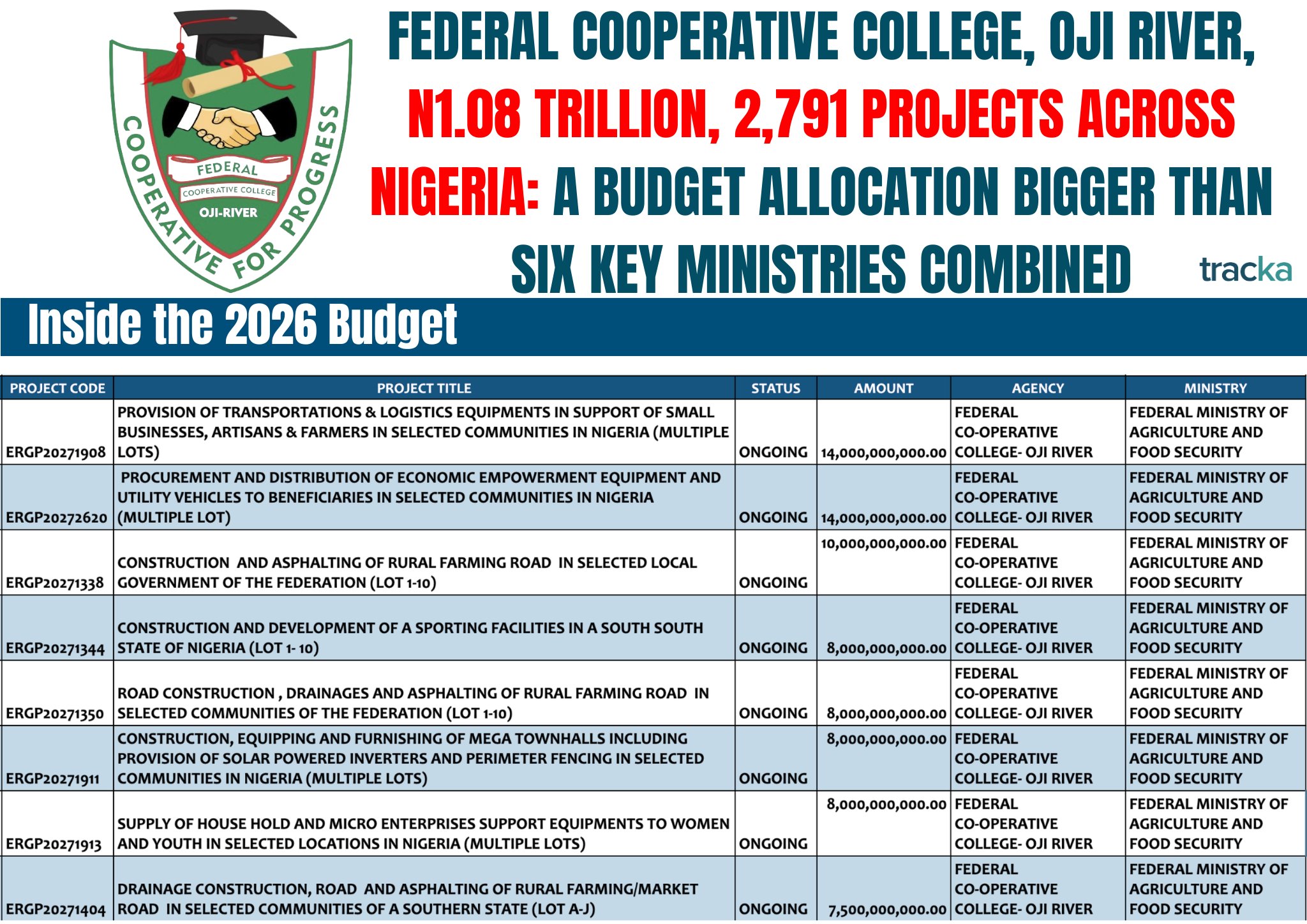
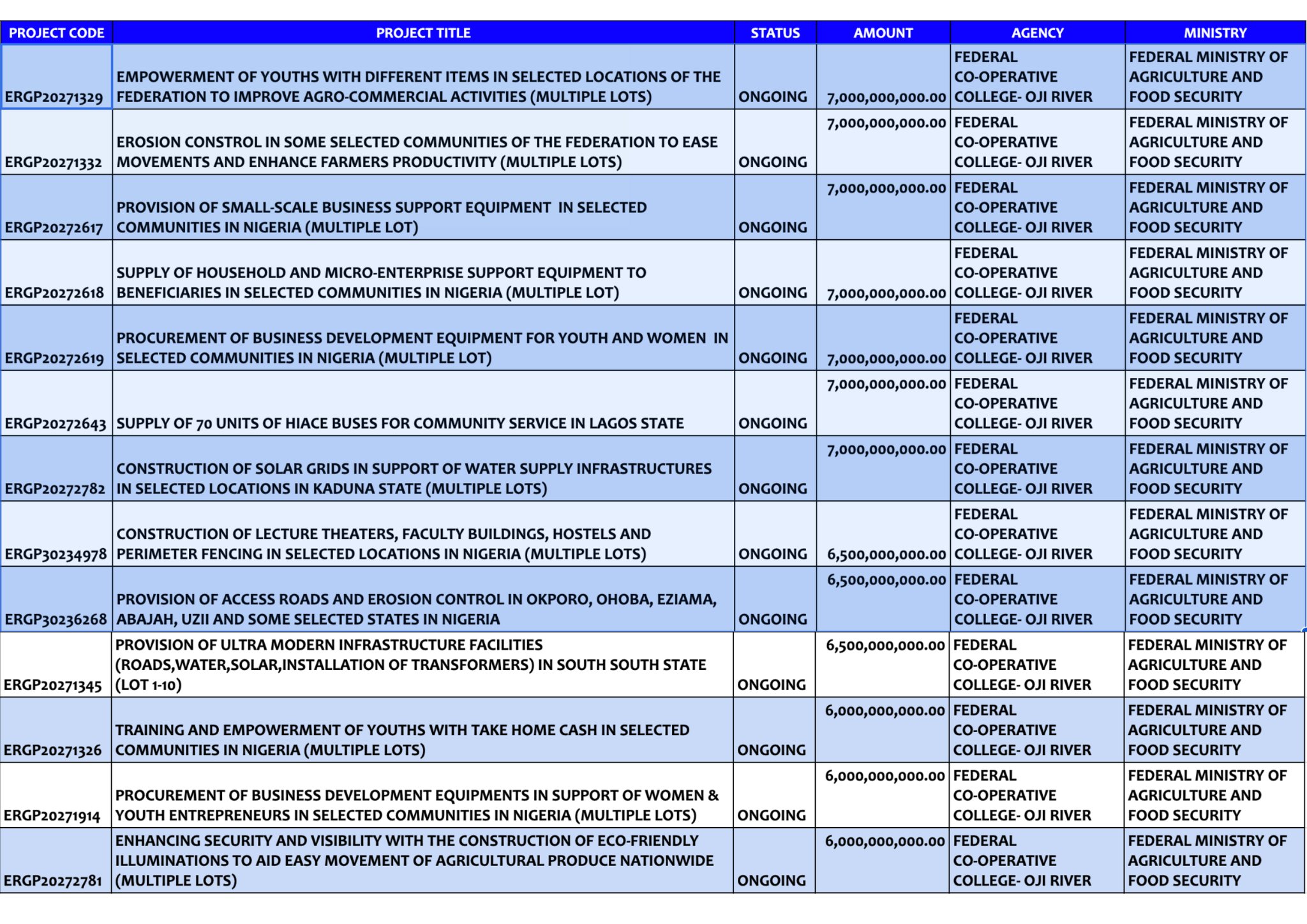
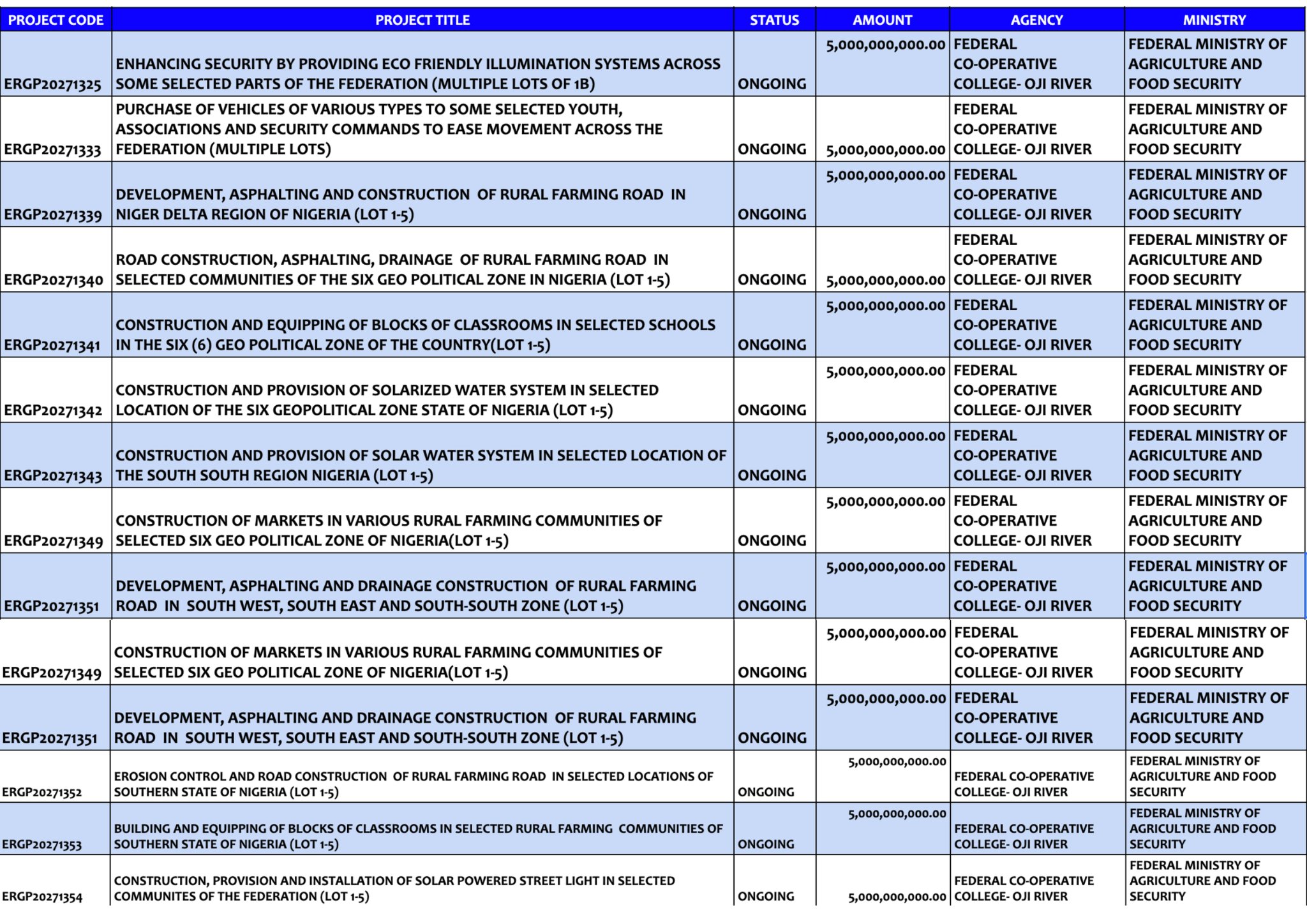
Tracka, the public finance transparency initiative of BudgIT, has raised concerns over the 2026 Federal Government budget, revealing that the Federal Cooperative College (FCC), Oji River, Enugu State, was allocated N1.08 trillion to execute 2,791 capital projects spread across all 36 states and the Federal Capital Territory.
In a statement posted on its official X account on Sunday, August 2, Tracka said the allocation was inconsistent with the institution’s statutory mandate and raised serious accountability concerns.
According to the organisation, the projects assigned to the college range from road and drainage construction to healthcare, education, agriculture, sports and renewable energy initiatives.
The list includes road and drainage projects, solar streetlights, digital learning centres, rice distribution and empowerment programmes, football pitches, medical outreaches, plastic recycling and processing plants, dialysis centres and ambulance procurement.
Tracka noted that the college’s primary responsibility is to promote cooperative education, research, innovation, leadership development and sustainable livelihoods, questioning why it had been assigned thousands of projects outside its core mandate.
The organisation also expressed concern that many of the projects lacked clearly identified locations, making it difficult for citizens to monitor implementation or hold anyone accountable.
READ ALSO: N400bn Budget Controversy Sparks Outrage Over Federal Spending Priorities
To underscore the scale of the allocation, Tracka pointed out that the ₦1.08 trillion budget for FCC Oji River exceeds the combined capital allocations of several federal ministries and agencies, including the Federal Ministries of Tourism, Arts, Communications and Solid Minerals Development, as well as the six agencies under the Federal Ministry of Interior.
Tracka asked, “Why is a cooperative college implementing projects far beyond its statutory mandate?”
It also questioned, “How were these projects assigned to the institution?”
The organisation further asked, “How can citizens track projects with no clearly defined locations?” and “What accountability mechanisms are in place to ensure value for money?”
Tracka argued that with Nigeria facing mounting fiscal pressures and depending heavily on borrowing to finance public expenditure, budget allocations should be transparent, strategic and entrusted to institutions with the legal mandate and capacity to deliver results.
It warned that budget items without specific locations, clearly identified beneficiaries or responsible implementing agencies create opportunities for waste, inefficiency and weak public accountability.