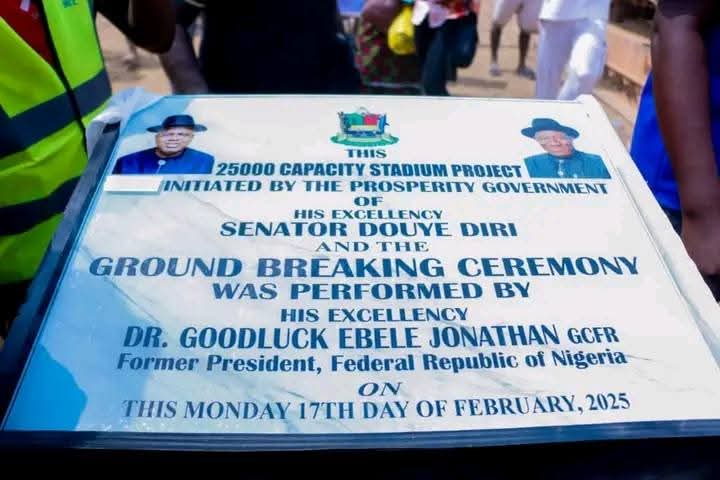
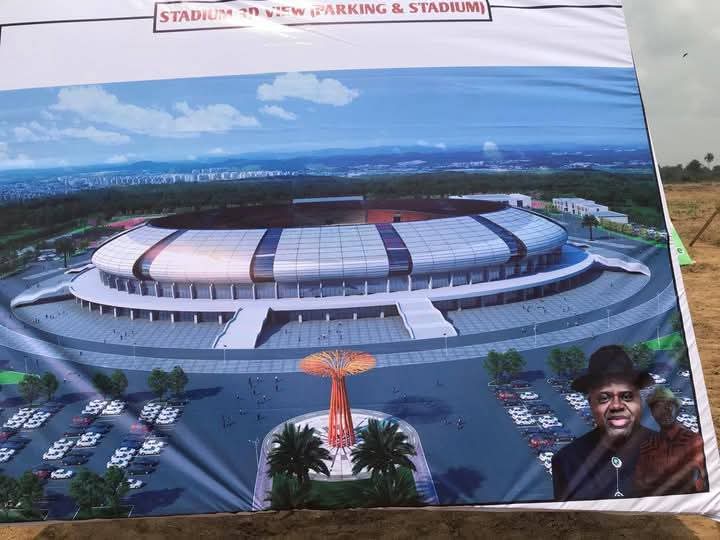
The construction of a 25,000-seat Olympic-standard stadium in Bayelsa State is set to transform the state’s sports landscape, attract global attention, and create new economic opportunities. Governor Douye Diri’s ambitious vision for this world-class facility marks a turning point, positioning Bayelsa as a hub for talent development and international sporting events.
At the groundbreaking ceremony, top sports administrators, FIFA representatives, the Nigeria Football Federation (NFF), and officials from the National Sports Commission expressed their excitement about the project, emphasizing its national significance beyond Bayelsa.
A national sports infrastructure for all Nigerians
The Chairman of the National Sports Commission, Alhaji Shehu Dikko, described the stadium as more than a Bayelsa project, calling it a “national sports asset.” According to him, this facility will not only serve Bayelsa athletes but will also be a venue for major competitions across Nigeria.
“When this facility is finished, it’s not only Bayelsa or Bayelsa citizens that will play here. Everybody in Nigeria will come and play here—Enugu Rangers, Kano Pillars, Shooting Stars, and even the Super Eagles. This is a national project, no longer just a Bayelsa project,” Dikko stated.
Dikko further emphasized that sports cannot thrive without modern infrastructure, and the federal government has made a historic commitment to support sports development.
“For the first time in Nigeria’s history, we have one of the biggest sports budgets this year, and most of it will go into infrastructure,” he revealed.
This aligns with President Bola Ahmed Tinubu’s broader vision for sports development, including the restructuring of the Ministry of Sports into a National Sports Commission to fast-track professional sports growth.
A boost for Bayelsa’s economy and sports tourism
Beyond its role as a venue for local and international matches, the stadium is expected to drive economic growth by attracting investors, sponsors, and sports tourists. Dikko noted that the project will evolve into a full-fledged sports city, with hotels, shopping malls, and residential areas, making it a business hub.
“This area will not just be a stadium—it will be a sports city. There should be housing, hotels, and shopping malls across this area, making it what it should be,” he said.
The facility is also expected to increase job opportunities, creating thousands of direct and indirect jobs during and after construction. Vendors, event organizers, security personnel, and maintenance staff will all benefit from this massive project.
The NFF President, Alhaji Ibrahim Gusau, echoed these sentiments, stressing the economic value the stadium will bring to Bayelsa and Nigeria at large.
“A FIFA-standard stadium in Bayelsa means we can bring international games here, which will create jobs, increase tourism, and attract investors,” Gusau stated.
World-class features for a global audience
Dikko emphasized that the stadium will be built with modern technology in mind, ensuring that it meets international broadcasting and commercial standards. He highlighted the importance of TV-friendly infrastructure, which will allow global audiences to experience Bayelsa’s sporting events.
“Stadiums are not just about the people who come to fill them; it’s about taking the content of the stadium to the rest of the world. TV infrastructure is key, and from now, we should ensure this stadium is plug-and-play for live broadcasts,” he said.
He also revealed plans for a Sports Infrastructure Development and Management Agency, which will work closely with states and the private sector to ensure that Nigeria’s sports facilities meet world-class standards.
A visionary project for future generations
The stadium is part of Governor Diri’s broader agenda to enhance Bayelsa’s visibility on the global sports map and develop young talents. The project also received high praise from FIFA and other sports stakeholders, who pledged their full support.
Former President Goodluck Jonathan, who was present at the ceremony, highlighted the importance of such investments in securing the future of Nigerian athletes.
“When we build a stadium like this, we are not just creating a place for sports; we are securing the future of our athletes. Many Nigerian sports heroes struggle after retirement, and we must ensure that they have lasting support,” Jonathan stated.
The countdown to completion
With a 24-month construction timeline, Bayelsa’s new stadium is set to be completed by 2027. Dikko ended his remarks with an exciting prospect for its grand opening:
“Exactly in 24 months, we will be back here to play the first match—probably Super Eagles versus Brazil. We wish you the best!”
READ ALSO: NFF Finalizes Plans for CAF B-License Coaching Course
The Bayelsa Olympic Stadium is more than just a sports facility; it is a monument to vision, development, and a brighter future for sports in Nigeria. As construction begins, all eyes will be on Bayelsa, awaiting the moment when its stadium becomes a landmark of excellence on the African continent.
Setting a new standard for Nigerian sports infrastructure
The construction of the Bayelsa Olympic Stadium represents a shift in Nigeria’s approach to sports infrastructure. Historically, many Nigerian stadiums have suffered from poor maintenance, lack of modern facilities, and limited commercial viability. However, this project is designed to correct past mistakes and set a new standard for stadium development across the country.
Dikko emphasized that Nigeria must learn from previous failures and adopt a futuristic approach to stadium construction.
“When you are building a stadium in 2025, you should learn from past mistakes and ensure the infrastructure is future-proof. We have seen that, apart from the Abuja Stadium, very few stadiums in Nigeria are ‘plug-and-play’ in terms of modern broadcasting and functionality. This must change,” he stated.
This focus on sustainability, functionality, and commercial potential ensures that the Bayelsa Olympic Stadium will not become another underutilized facility, but rather a thriving hub for sports, entertainment, and tourism.
A catalyst for grassroots sports development
Beyond hosting major national and international events, the new stadium is expected to play a critical role in grassroots sports development. Many footballers and athletes in Nigeria struggle with access to quality training facilities, which affects their competitiveness on the global stage.
With this project, Bayelsa is positioning itself as a center for nurturing young talent, providing a platform for athletes from across the region to train and compete at an elite level.
According to NFF President Gusau, the facility will serve as a breeding ground for future Super Eagles stars, helping to bridge the gap between local talents and international football opportunities.
“For our players to be world-class, they need world-class facilities. This stadium will give young footballers a chance to develop their skills in a professional environment, helping them reach their full potential,” Gusau explained.
Additionally, the National Sports Commission is working on a comprehensive talent development strategy, which will use the stadium to host scouting programs, coaching clinics, and age-grade competitions.
Private sector involvement and sports investment
A key aspect of this project is private sector participation. Unlike many government-funded stadiums that struggle with maintenance and sustainability, the Bayelsa Olympic Stadium is expected to attract private investors who will help manage and operate the facility profitably.
Dikko highlighted the importance of a public-private partnership (PPP) model, which will allow corporate sponsors, sports brands, and investors to contribute to the stadium’s long-term success.
“Sports is not just about passion; it is a business. If we want our stadiums to thrive, we need private investment. That is why the Sports Commission is working on a framework that allows private companies to partner with government projects like this one,” he said.
This model is already being used in countries like England, Spain, and Germany, where stadiums are self-sustaining businesses, generating revenue through ticket sales, sponsorships, merchandising, and event hosting.
With proper planning, the Bayelsa Olympic Stadium can replicate this success, becoming a profitable sports complex rather than a government liability.
The road to completion: A nation’s anticipation
As the countdown to the stadium’s completion begins, expectations are high. The promise of hosting a Super Eagles match against Brazil at the opening ceremony has sparked excitement among Nigerian football fans, who see this as a symbol of progress.
If completed on schedule, the stadium could also play a major role in Nigeria’s bid to host international tournaments, including the AFCON, FIFA U-20 World Cup, and African Games.
Governor Douye Diri, whose administration has championed this project, reassured stakeholders that his government is fully committed to seeing it through.
“Bayelsa is ready to make history. This stadium will not only serve our people but will put us on the global map. We are building for the future,” he said.
Conclusion: A bold step toward Nigeria’s sports renaissance
The Bayelsa Olympic Stadium represents more than just bricks and mortar—it is a statement of intent. It symbolizes a new era for sports development in Nigeria, where infrastructure, investment, and vision come together to create lasting impact.
As construction progresses, sports lovers, investors, and government stakeholders will be watching closely, eager to witness the birth of a world-class sporting destination in Nigeria.
If successful, this project could inspire other states to prioritize sports infrastructure, setting the stage for Nigeria to reclaim its status as a dominant force in African sports.