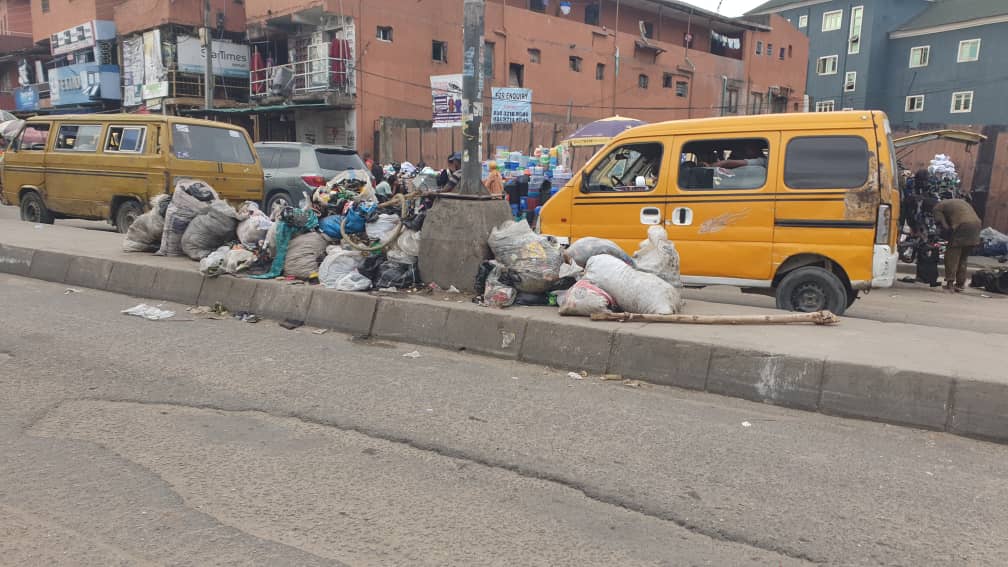
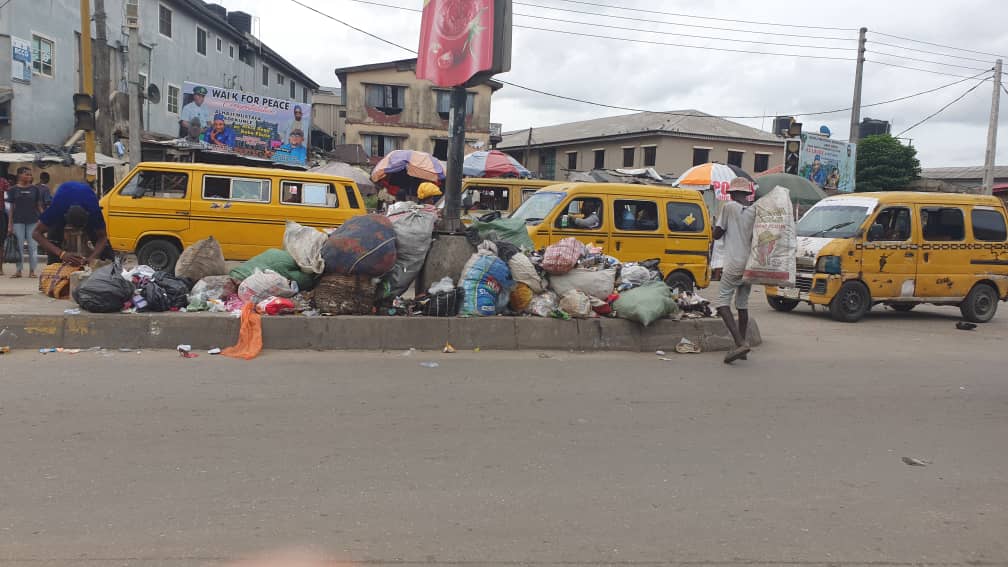
Every day, hundreds of commuters pass through Ilasamaja bus stop, a major link between Mushin and Isolo, but before they get to their destination, they are greeted by a shameful sight that now defines the area more than the traffic, the shops, or the noise.
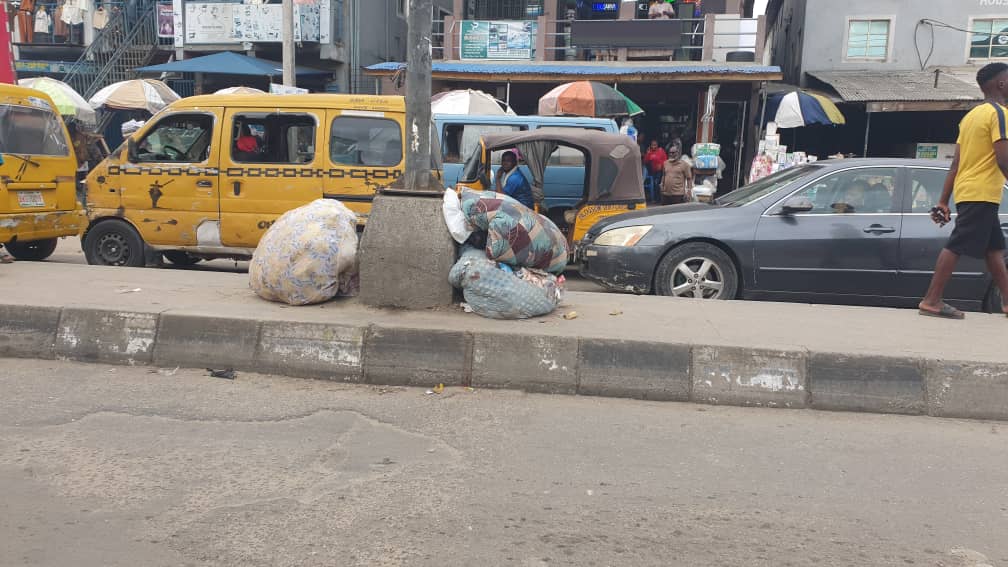
A towering heap of waste sits at the bus stop like it was built into the structure of the road. Rotten food, nylons, plastic bottles, used diapers, torn clothes; this is not a mistake. This is deliberate dumping.
From that single heap in Ilasamaja, the trail continues. As you move down Isolo Road towards Idi Oro, it gets worse.
The garbage becomes more frequent, more careless.
You can count up to six or seven dumps along the roadside. This is not just about looking dirty, it’s about living in danger.
When rain falls, the waste flows with it, blocking drainages and forcing dirty water back into homes and shops. When the sun is out, the smell rises with the heat. Flies hover over food trays. Mosquitoes thrive, what you are looking at is not just trash, it’s the beginning of the next cholera outbreak.
It’s a ticking time bomb of disease, especially in crowded areas like Mushin where sanitation is already a struggle.
The Lagos State Waste Management Agency (LAWMA) is working. Anyone who lives around this part of Lagos knows that those trucks come out early in the morning, sometimes even in the middle of the night, to clear the dumps.
They Agency has also set up a Surveillance Team that records and arrests people trying to sneak waste onto the road.
In several online videos, the team was seen apprehending women attempting to dump their refuse. But let’s be honest: this shouldn’t be LAWMA’s job alone. Each household in Lagos is expected to register for waste collection and pay a monthly LAWMA bill. It’s a simple responsibility.
Waste collectors are assigned to specific streets and are supposed to show up weekly. But many people refuse to pay, some claim they never see the collectors, some people even say it’s too expensive.
So what do they do? They wait until dark. Then, they quietly drag their black bags, sometimes entire bins, to the roadside.
Some use wheelbarrows, Some throw waste into drainages when it’s raining, Some dump it behind other people’s shops or beside abandoned vehicles. It’s a community act of selfishness.
READ ALSO: Man Lands in Prison for Dumping Refuse on Expressway
And then the next morning, when the smell is unbearable, they complain.
Walk down Isolo Road and ask yourself where are the community leaders? Where are the landlords? Why aren’t the street meetings or warnings from residents’ associations? Why are tenants allowed to dump refuse on the road without consequences? Why do we all pretend it’s someone else’s fault?
The issue is not new, but it’s getting worse. LAWMA can’t be everywhere every time. Even with their dedication, they are not magicians.
They are dealing with a population that keeps producing waste but refuses to manage it. The road from Ilasamaja to Idi Oro should not look like a dumpsite. It should not smell like one either.
If you live there, you should be angry. If you work there you should speak up, If you are passing through, you shouldn’t have to hold your breath.
Waste does not just disappear, it ends up in your water, in your food, in your lungs. And if we keep turning our roads into garbage sites, we are signing up for sickness, chaos, and slow death.
So next time someone says, “It’s LAWMA’s job,” remind them it starts with you. Dumping of refuse isn’t limited to Mushin; it happens in many parts of Lagos.
Stronger measures are urgently needed to put an end to it.