Eric Patrick

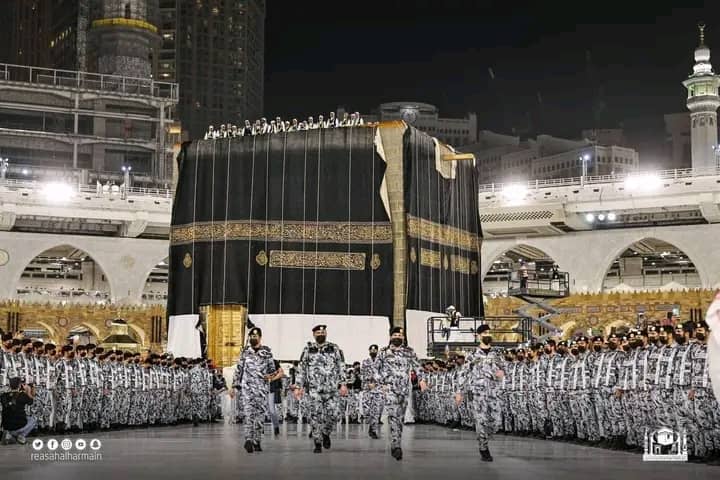
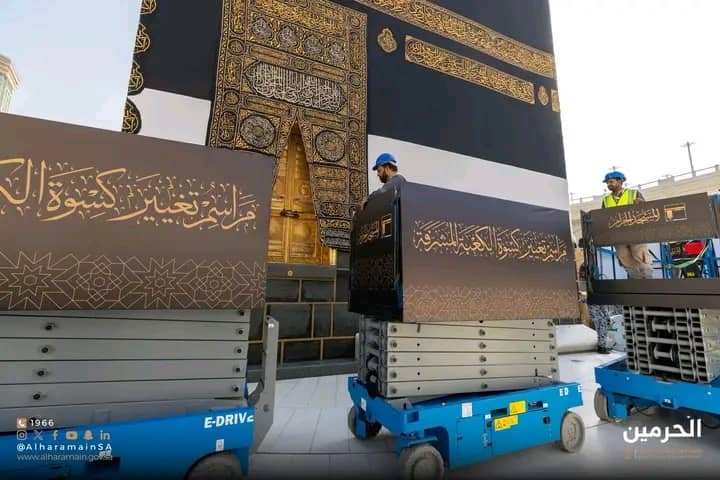
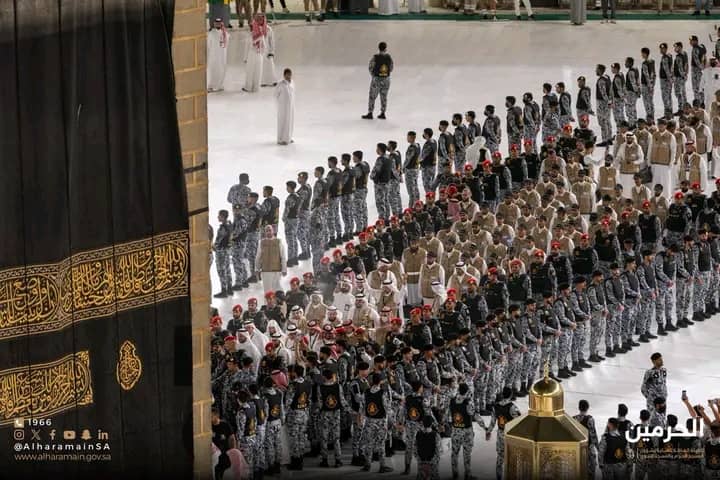
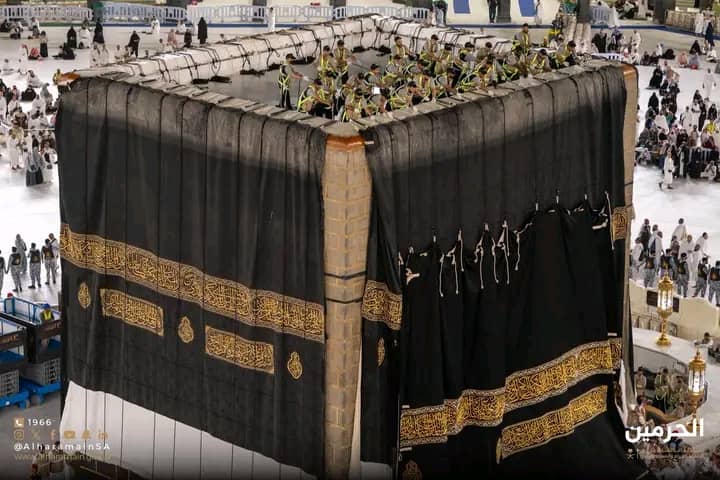
The annual tradition of replacing the Kiswa—the sacred black cloth covering the Holy Kaabah began on Wednesday evening at the Grand Mosque in Mecca, marking the arrival of the new Islamic year, Hijrah 1447.
The ceremony is being overseen by the King Abdulaziz Complex for the Holy Kaabah Kiswa, under the supervision of the General Presidency for the Affairs of the Grand Mosque and the Prophet’s Mosque.
The intricate and spiritually significant process is expected to conclude by Thursday morning, coinciding with the first day of the new Hijri calendar year.
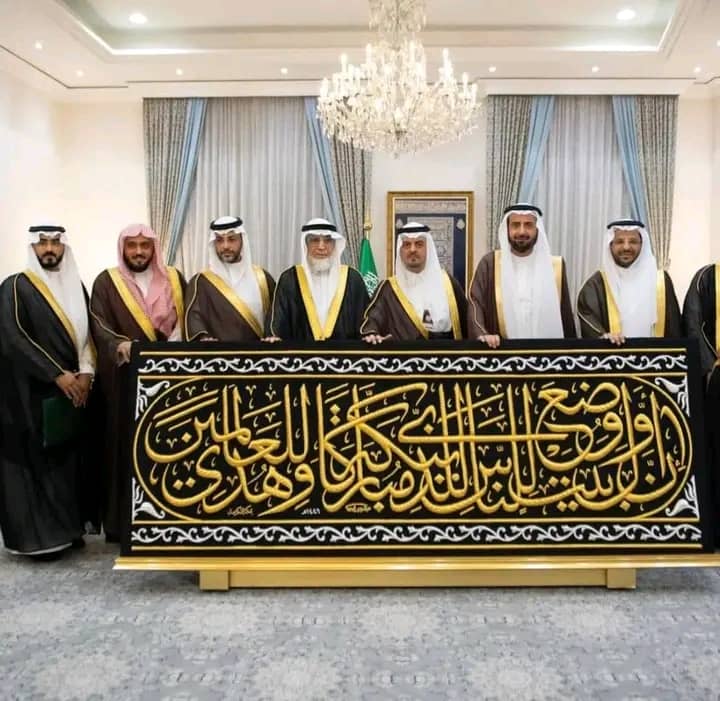
According to Inside Haramain, the official platform for updates from the Two Holy Mosques, the new Kiswa was officially handed over on June 8 by the Deputy Emir of Makkah, Prince Saud bin Mishaal, to Abdul Malik bin Taha Al-Shaibi, the senior keeper of the Grand Mosque.
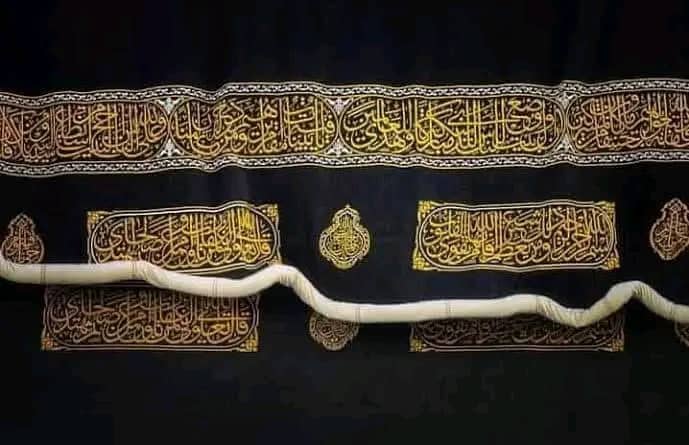
Crafted from naturally dyed black silk and embroidered with verses from the Qur’an in gold and silver threads, the new Kiswa reflects a deep spiritual and artistic tradition.
The ceremony began with the removal of the gilded curtain covering the Kaabah’s door, which measures 6.35 meters long and 3.33 meters wide.
Chandeliers and decorative elements surrounding the Kaabah were also temporarily removed to allow for the seamless replacement of the old cover.
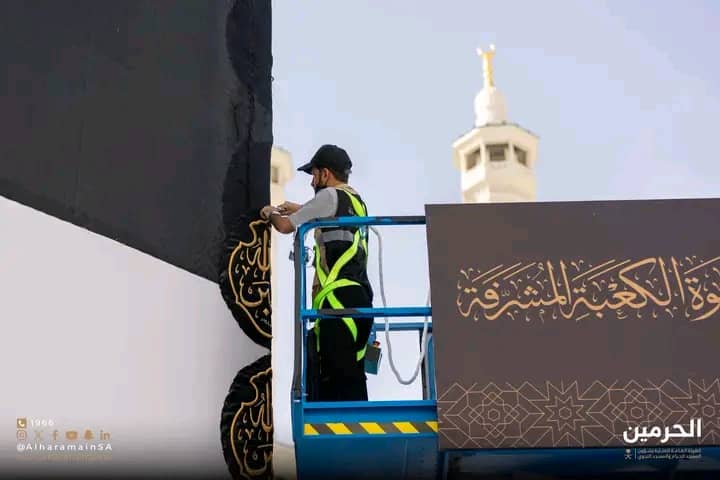
A dedicated team of 154 skilled Saudi craftsmen, with both scientific knowledge and hands-on expertise, is carrying out the replacement.
The process involves detaching the old Kiswa, removing its gilded features, and carefully installing the new one.
READ ALSO: Nigerian Female Pilgrim Finds $5,000 in Saudi Arabia, Returns It to Russian Owner
The new Kiswa comprises 47 panels of intricately embroidered black silk featuring 68 Qur’anic verses.
These are stitched with threads made from 24-karat gold-plated silver.
In total, the Kiswa weighs about 1,415 kilograms.
Materials used in its production include 120 kilograms of gold-plated silver thread, 60 kilograms of pure silver, 825 kilograms of silk, and 410 kilograms of raw cotton. Additionally, 54 gilded elements were produced using eight advanced weaving machines.
The replacement of the Kaabah’s Kiswa is not only a display of exquisite craftsmanship but also a symbol of the Kingdom of Saudi Arabia’s continued dedication to preserving and honoring Islam’s holiest sanctuary.