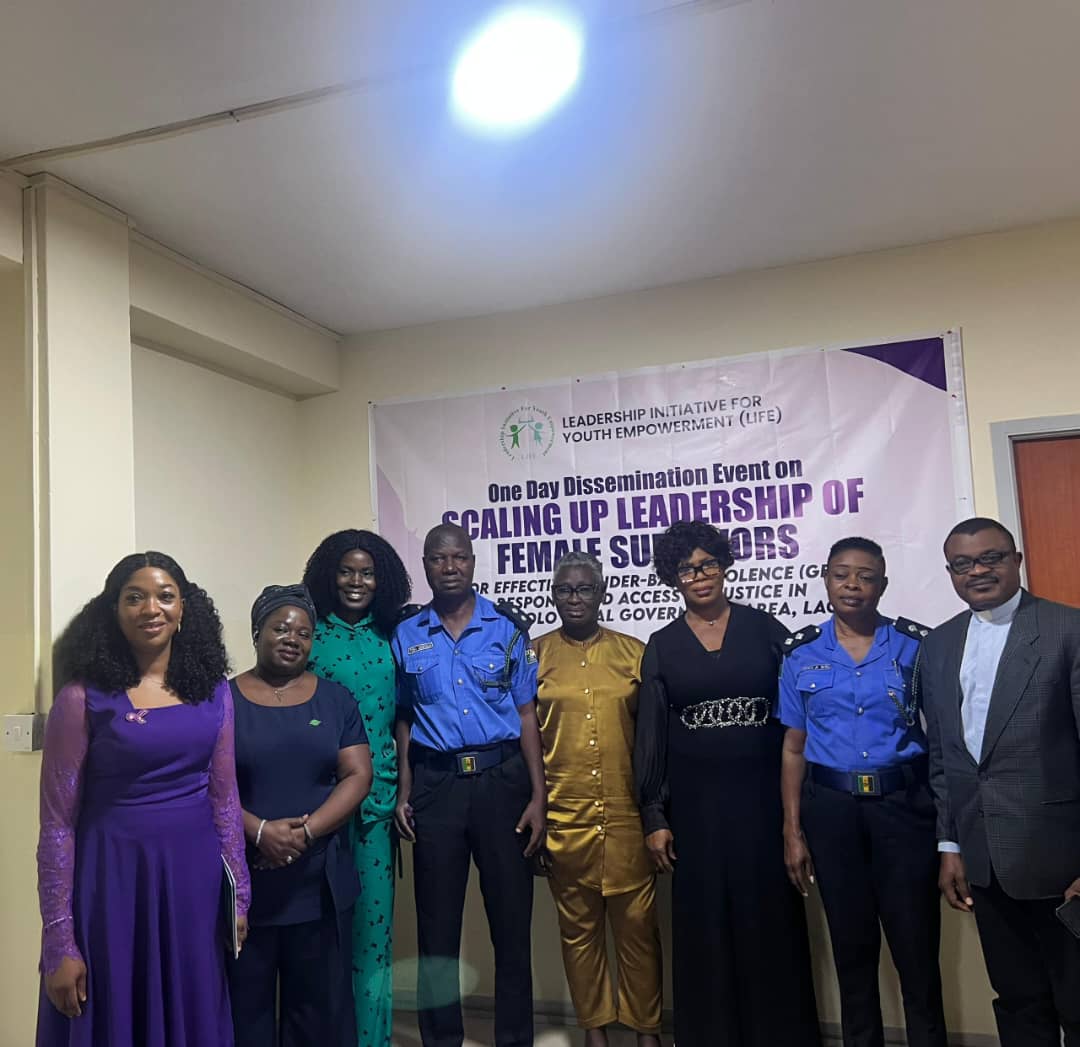
The Leadership Initiative for Youth Empowerment (LIFE) has called for stronger protection frameworks and community-led solutions to address the persistent rise in Gender-Based Violence (GBV) and to empower women in underserved communities to become advocates for social change.
This call was made during a one-day sensitisation and dissemination event organised by LIFE on Thursday, October 9, 2025, at Vantage Hub, Ikeja, Lagos. The event focused on sharing the outcomes of LIFE’s 32-month project titled “Scaling Up Leadership of Female Survivors for Effective GBV Response and Access to Justice.”
In her presentation, LIFE’s Programme Officer, Mrs. Oluwatoyin Mokwe, said the project was designed to deepen awareness, improve access to justice, and build resilience among survivors of gender-based violence, particularly women in low-income communities.
According to her, the project adopted a holistic approach that provided psychosocial counselling, legal aid, leadership training, and community-wide advocacy. The intervention, she explained, was implemented in partnership with the Lagos State Domestic and Sexual Violence Agency (DSVA), law enforcement agencies, and civil society organisations.
“Our goal was not only to provide immediate support to survivors but to empower women — including those with disabilities and those from marginalised backgrounds — to become leaders and change agents in their communities,” Mokwe said.
She revealed that through the initiative, 80 GBV Reporting Champions were trained, over 1,380 women reached through peer-led sessions, and 3,000 copies of the Lagos State Domestic Violence Law and Special Persons Law were distributed. The project also recorded tangible outcomes, including 20 arrests, 10 rescues, and the facilitation of 10 court cases for survivors.
Mokwe, however, highlighted major obstacles, including fear of retaliation, family stigma, economic dependency, community backlash, and delays within the justice system. She urged for increased funding for psychosocial and legal support services, expanded survivor-led advocacy networks, and greater collaboration with law enforcement agencies.
Presenting the project’s executive summary, Mrs. Femi-Adebayo said the programme significantly improved the mental health and self-esteem of survivors, many of whom have now become active advocates supporting other women in their localities.
READ ALSO: WRAHP Leads Charge in Combating Sexual Violence through Community Advocacy
“These findings remind us that while we’ve recorded progress, a lot still needs to be done to strengthen protection systems and ensure survivors are not just surviving, but living with dignity and purpose,” she said.
One survivor quoted in LIFE’s report shared: “Because of LIFE, I’m no longer just surviving — I’m living.”
The event featured interactive sessions where participants shared personal experiences, asked questions, and received guidance on available support systems. It also provided networking opportunities for youth groups, government representatives, civil society organisations, and justice sector actors who reaffirmed their commitment to improving access to justice and protection for GBV survivors in Lagos State.
Founded in 2012, the Leadership Initiative for Youth Empowerment (LIFE) works to empower youths, women, and vulnerable populations through advocacy, sensitisation, leadership development, and evidence-based research. The organisation’s values of teamwork, integrity, empathy, and accountability continue to shape its interventions and advocacy for a more inclusive, gender-just society.