
Nigeria’s week was defined by a governor’s presidential declaration, a landmark corruption sentence, allegations of public fund diversion for political purposes, and the continuing fragmentation of opposition politics.
Oyo Governor Seyi Makinde declared his 2027 presidential ambition under the Allied Peoples Movement at a rally in Ibadan, drawing immediate ridicule from FCT Minister Nyesom Wike, who declared the bid “dead on arrival.”
Aviation Minister Festus Keyamo dismissed the NDC’s decision to zone its presidential ticket to the South as “political 419,” comparing it to Jonathan’s broken one-term promise.
The ADC demanded an independent probe into allegations that over ₦800 billion in FAAC deductions was diverted into APC campaign structures.
A Federal High Court sentenced former Power Minister Saleh Mamman to 75 years in prison for ₦33.8 billion fraud, in one of Nigeria’s most significant corruption sentences in years.
And the Labour Party acknowledged that Peter Obi’s departure left a void in its ranks, even as it insisted it retains the capacity to produce a strong 2027 presidential candidate.
Together, these stories reveal a country where the 2027 race is now officially underway, corruption accountability is producing landmark sentences, public funds are allegedly being weaponised for re-election, and the opposition remains fragmented, competitive, and combative.
1. Makinde Declares 2027 Presidential Bid Under APM In Ibadan Rally

Oyo Governor Seyi Makinde declared his 2027 presidential ambition under the Allied Peoples Movement at Mapo Hall in Ibadan, leading a faction of the PDP in signing an MOU with the APM for the 2027 elections.
Why it Matters:
Makinde’s declaration is the most consequential opposition move since Obi and Kwankwaso joined the NDC. A sitting governor with a South-West base and PDP credentials entering the race adds genuine competition to the 2027 field. But his platform choice, the APM rather than a major party, raises questions about electoral viability. For the PDP nationally, this represents a structural haemorrhage at the worst possible moment. Makinde is not simply leaving, but taking candidates, structures, and loyalists with him.
2. “Political 419”: Keyamo Slams NDC For Zoning Presidential Ticket South
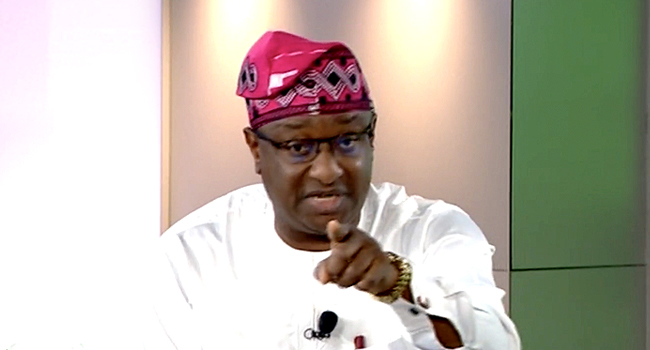
Aviation Minister Festus Keyamo dismissed the NDC’s decision to zone its presidential ticket to the South for one term as “political 419,” comparing it to Jonathan’s broken one-term promise. He warned Nigerians not to be deceived by what he called a desperate opposition strategy.
Why it Matters:
Keyamo’s criticism, albeit partisan, raises a legitimate question: what guarantees that a one-term zoning agreement will be honored in a country where internal party agreements have repeatedly been discarded when inconvenient? His criticism also reveals the APC’s anxiety about a consolidating opposition. By invoking the Jonathan one-term betrayal, still a raw wound in Northern political memory, he is doing targeted work: reminding Northern voters why they should distrust southern-led opposition promises. It seems like a pre-emptive electoral warfare dressed as civic concern, and it will resonate deeply where it is intended to.
3. ADC Demands Probe Over Alleged ₦800bn FAAC Deduction For APC Campaign

The ADC accused the APC of diverting over ₦800 billion in FAAC deductions into campaign structures linked to Governor Hope Uzodimma’s “Renewed Hope Network.” Calling for an independent investigation, the ADC described the allegations as a direct theft of public resources.
Why it Matters:
If true, this is the most explosive allegation of the week. Diverting FAAC allocations, constitutionally designated for states and local governments, into a ruling party campaign structure would represent systemic corruption at a scale that dwarfs routine patronage. Even if unproven, the claim deepens public suspicion on how public money is spent and the opacity of public expenditure. Either way, this demands urgent and independent investigation, but who will bell the cat?
READ ALSO: Defections, Opposition Crisis and Diplomatic Snubs: A Nation In Flux
4. Court Jails Ex-Power Minister Mamman For 75 Years Over ₦33.8bn Fraud
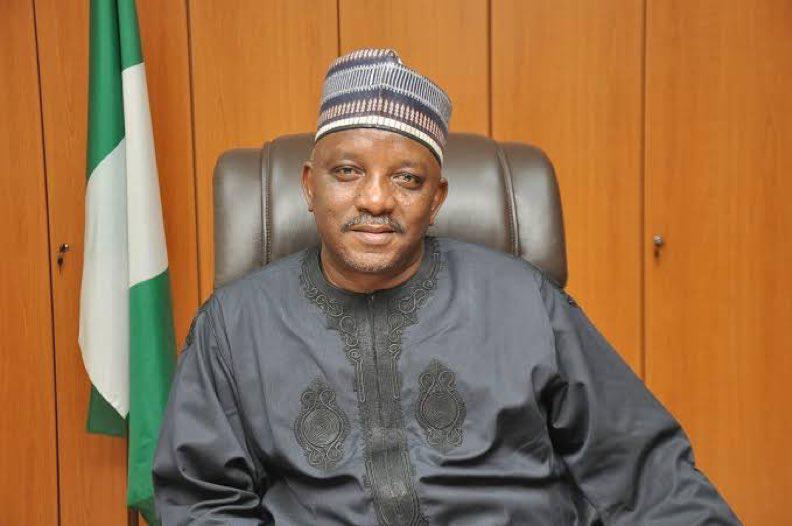
A Federal High Court sentenced former Power Minister Saleh Mamman to 75 years in prison for ₦33.8 billion fraud involving hydroelectric power projects. Mamman was convicted in absentia, and security agencies have been directed to work with Interpol to track him.
Why it Matters:
75 years imprisonment for a former minister is the kind of sentence that sends a message. Mamman diverted funds meant for the Zungeru and Mambilla hydroelectric projects, money that could have addressed Nigeria’s chronic power crisis, while Nigerians remained in darkness. The judge’s observation that he was “living large at the expense of ordinary citizens” captures the moral weight of the conviction. But justice is incomplete while Mamman remains at large. His arrest is now the test of institutional resolve.
5. Makinde’s Presidential Bid Dead On Arrival — Wike

FCT Minister Nyesom Wike dismissed Makinde’s presidential declaration as “dead on arrival,” denying that any PDP-APM alliance exists and warning that Makinde cannot fly the PDP flag. Wike said the arrangement is a “419” scheme unrecognized by INEC or the PDP.
Why it Matters:
Wike’s reaction reveals the fault lines within the opposition. The PDP faction aligned with Wike and the ruling APC, is determined to prevent Makinde from consolidating PDP support under a rival platform. If Wike can deny Makinde the PDP brand while simultaneously supporting Tinubu, he effectively neutralizes both the internal PDP opposition and the APM alliance. However, it is not up to Wike’s hand to decide Makinde’s right to contest election or be voted for.
6. Peter Obi’s Departure Left Void In Labour Party, Says Spokesman

Labour Party spokesman Ken Asogwa acknowledged that Peter Obi’s exit left a significant void but said the party had anticipated his departure and taken steps to cushion the impact. The party is now rebuilding through its institutional links with the NLC and TUC.
Why it Matters:
The Labour Party’s honest admission, that Obi was “a colossus” whose departure left a void, is a rare moment of institutional candor in Nigerian politics. But candor without strategy is insufficient. The party’s pivot to organized labor is structurally sound but politically limited: NLC and TUC membership does not automatically translate to electoral victories. Labour needs a candidate of Obi’s profile to remain credible in 2027. Without one, it risks returning to irrelevance.
Conclusion
This week’s stories collectively confirm that the 2027 race is no longer a distant horizon. It is the present tense of Nigerian politics. Every defection, every declaration, every denial is already a campaign move. Makinde has placed his bet. Wike has thrown down his counter.
Atiku and Amaechi have picked their forms. Labour is rebuilding. The NDC is positioning. And the APC, despite facing the most serious financial misconduct allegation of Tinubu’s tenure, enters the week with all the structural advantages of incumbency intact.
What Nigeria’s voters make of all this, the noise, the realignments, the convictions in absentia, the billion-naira accusations, will be the true political story of the months ahead.
The 2027 playing field is already tilted. The question is not whether Nigeria will have an election in 2027. It will. The question is whether it will have a fair one. This week’s events suggest the answer remains deeply uncertain.