
Nigeria’s defining story this week was not politics alone. It was the widening gap between the nation’s democratic ambitions and its security realities.
A new report revealed that 842 people were killed and 279 abducted in May alone, underscoring the scale of the country’s security emergency.
In Oyo State, citizens took to the streets after abducted schoolchildren and teachers spent one month in captivity, reflecting growing frustration with government efforts to protect lives.
Against this backdrop, the Senate passed the long-debated State Police Bill, potentially setting Nigeria on course for the biggest overhaul of its policing system since independence.
Politically, a Federal High Court in Lokoja nullified the NDC’s registration, setting aside a judgment that had compelled INEC to recognise the party, while the party’s 2027 presidential candidate, Peter Obi, alleged that the Federal Government was working to stop him from appearing on the ballot.
Meanwhile, presidential spokesman Bayo Onanuga stirred fresh controversy by insisting he did not see the level of hunger many Nigerians complain about, reopening debate over the disconnect between official narratives and everyday realities.
Together, the week’s events exposed a nation simultaneously confronting insecurity, constitutional reform, electoral uncertainty and the growing challenge of sustaining public confidence in governance.
1. 842 Killed, 279 Abducted Across Nigeria In May

A Nextier report revealed that 842 Nigerians were killed and 279 abducted in 156 violent incidents during May 2026, with fatalities rising by over 90 per cent compared to the same period last year.
Why it Matters:
Statistics of this magnitude move insecurity beyond isolated tragedies into the realm of national emergency. When violence nearly doubles within a year, questions inevitably arise about the effectiveness of existing security strategies. Equally important, the report argues that peacebuilding should no longer be measured by workshops and meetings but by whether Nigerians are actually becoming safer, a standard that increasingly appears difficult to satisfy.
2. One Month in Captivity: Hundreds Protest Abduction of Oyo Teachers, Schoolchildren
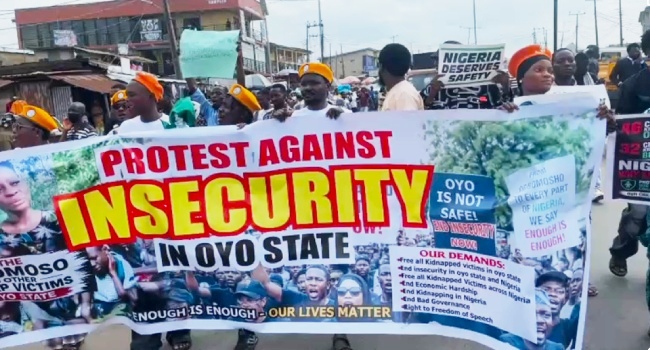
Hundreds of protesters led by the Take It Back Movement occupied Ibadan’s Iwo Road, demanding the release of abducted schoolchildren and teachers after one month in captivity while condemning worsening insecurity nationwide.
Why it Matters:
Insecurity has breached the South-West, long considered a sanctuary in a bleeding country. The government’s visible failure to secure the release of the school children and their teachers while actively preparing for 2027 elections is exactly the kind of failure that destroys public trust. The protest is a sobering reminder that for many families, survival, not elections, is the immediate concern. Nigerians are watching, and the hostages are still there.
3. Senate Passes State Police Bill
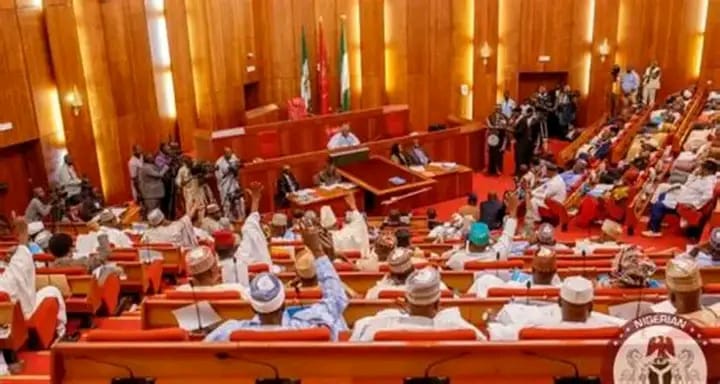
The Senate approved a constitutional amendment establishing state police, empowering governors to appoint commissioners of police while introducing safeguards against political abuse, pending further constitutional approvals by state legislatures.
Why it Matters:
For over two decades, state police has been the holy grail of Nigeria’s security reform debate, repeatedly stalled by fears of gubernatorial abuse. Its passage signals a tectonic shift away from the colonial-era centralised policing model that has failed to contain banditry, terrorism, and communal violence. However, the real test lies ahead, ratification by State Houses of Assembly and the delicate balancing act of preventing governors from weaponising the new force against political opponents.
READ ALSO: Power, Bloodshed And Billions: Nigeria’s Week Of Reckoning
4. Federal High Court Nullifies NDC Registration
A Federal High Court in Lokoja nullified its earlier judgment directing INEC to register the Nigeria Democratic Congress, ruling that necessary parties were excluded. The court ordered a fresh hearing, effectively stripping the NDC of its legal recognition pending a new determination.
Why it Matters:
The ruling injects legal uncertainty into Nigeria’s opposition landscape at a crucial political moment. The timing has fuelled political speculations, yet no evidence links the APC or Federal Government to the case. LP, PDP, ADC, and now the NDC are all entangled in litigation or factional conflict, while the APC faces no comparable disruption. Whether coincidental or not, the opposition enters 2027 under sustained legal and organisational pressure that could complicate its ability to field candidates.
5. Obi Alleges FG Plotting To Stop His 2027 Candidacy
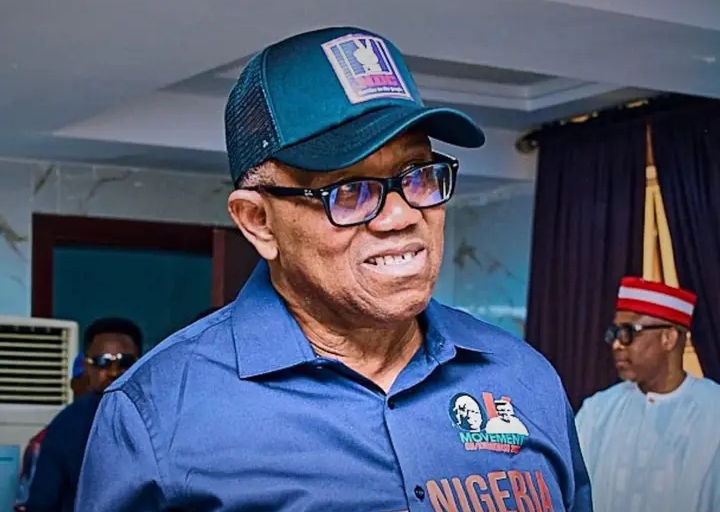
NDC presidential candidate Peter Obi alleged that the Federal Government is working to prevent him from contesting the 2027 presidential election while challenging President Bola Tinubu and other aspirants to a public debate.
Why it Matters:
Whether substantiated or not, Obi’s allegation elevates political competition into questions about electoral fairness. His remarks also connect directly to the ongoing litigation surrounding the NDC’s registration, reinforcing opposition concerns about institutional neutrality. At the same time, his call for issue-based presidential debates shifts attention toward policy, an area often overshadowed by identity politics and electoral manoeuvring.
6. Onanuga Questions Reports Of Widespread Hunger

Presidential spokesman Bayo Onanuga said he does not observe the level of hunger widely reported by Nigerians, citing government interventions including higher minimum wages, student loans and infrastructure investments.
Why it Matters:
Economic perception often matters as much as economic policy. While government officials point to reforms and infrastructure projects, many Nigerians continue to experience rising food prices and declining purchasing power. Statements appearing to minimise hardship risk widening the trust deficit between government and citizens. Public confidence depends not only on policy outcomes but also on whether leaders acknowledge people’s lived experiences.
Conclusion
This week’s developments reveal two competing realities confronting Nigeria.
On one hand, lawmakers are pursuing structural reforms capable of reshaping the country’s security architecture, while politicians intensify preparations for the 2027 elections.
On the other, mounting insecurity, unresolved kidnappings and persistent public anxiety continue to dominate daily life.
The passage of the State Police Bill offers the promise of long-term institutional change. Yet constitutional reform alone cannot erase the immediate fears of communities living under the threat of violence.
As political actors increasingly focus on the next election, Nigerians remain preoccupied with more immediate questions: Can they travel safely? Can children attend school without fear? Can democratic institutions inspire confidence?
Ultimately, the success of both governance and politics will be judged less by declarations and debates than by the state’s ability to restore security, strengthen public trust and deliver tangible improvements to the lives of ordinary citizens.