As dawn breaks over Lagos, the city stirs awake. Roads fill with early traffic, buses cough out dark smoke, and traders arrange their goods with practiced rhythm. From doorways and balconies, radios play softly, conductors shout destinations, and hurried footsteps echo the restless energy that defines Nigeria’s commercial capital.
Yet in certain corners of the city, mornings unfold differently.
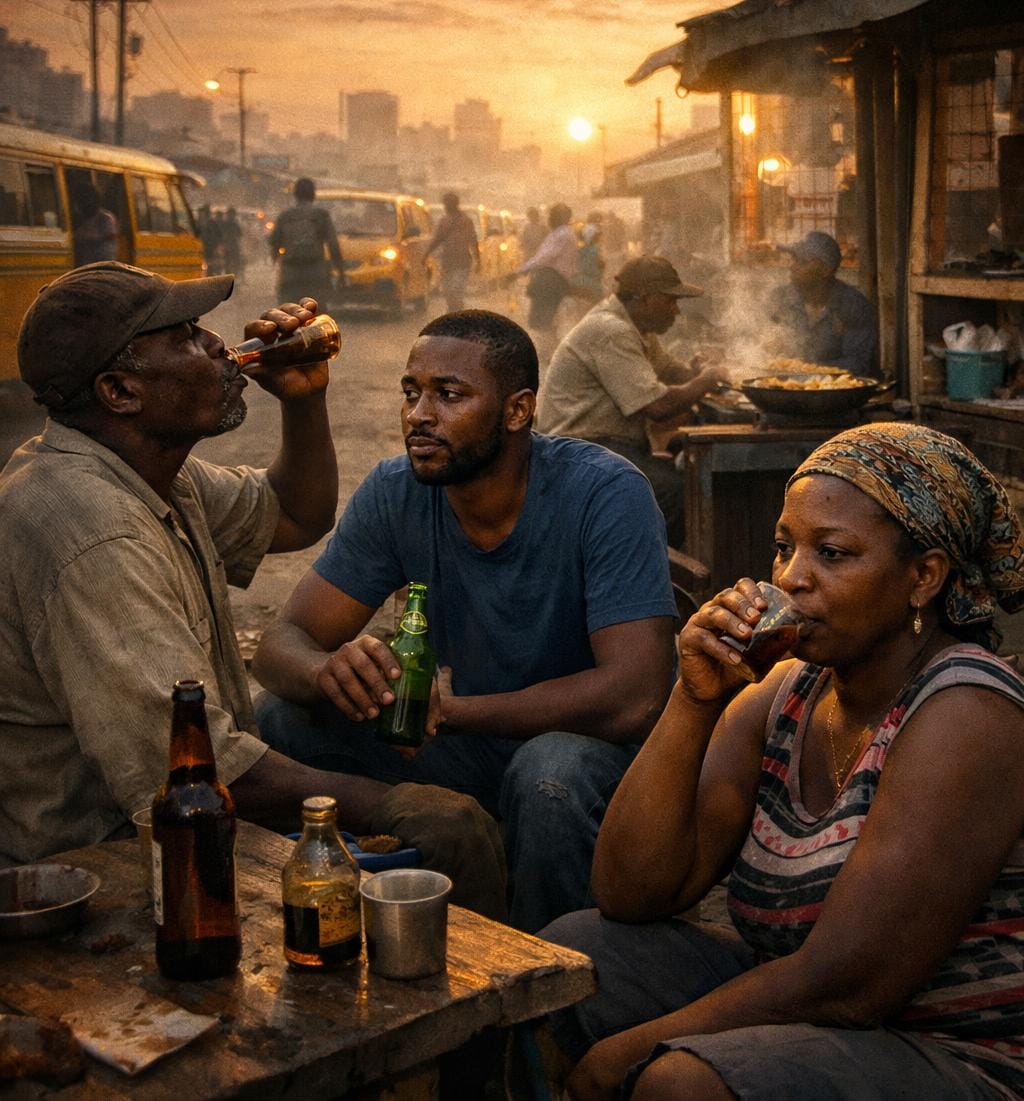
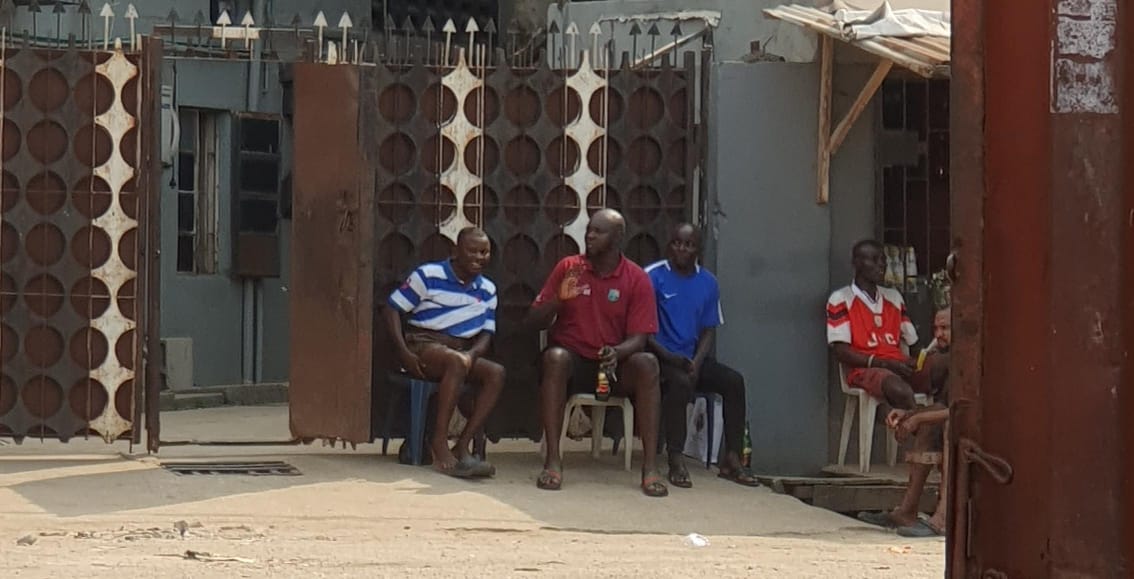
On dusty streets and beside roadside kiosks, a quieter ritual takes place. Bottles are uncapped before breakfast. Small flasks of gin and bottles of beer pass from hand to hand. Some sit in clusters on plastic chairs; others lean against walls, sipping slowly, exchanging soft laughter, sighs, and long silences.
The scent of alcohol drifts lightly through the air, mingling with the aroma of street food and exhaust fumes.
For a passerby, the sight can be jarring. But for those who gather here each morning, it is routine—a way to cope with the weight of uncertainty, and sometimes, a brief escape from the pressures of life.
Drinking Away the Weight of Expectations
Mr. Oba, a longtime resident who has observed these gatherings for more than two decades, says appearances can be deceiving.
“Many of them are educated,” he explains. “Some learned trades, some finished school. Life just didn’t go the way they expected.”
He notes that mornings are often the hardest time for those without steady work. Waking up to another day without income, prospects, or clear direction can feel overwhelming. For some, alcohol quiets the anxiety, at least for a while.
Miss Mariam, a petty trader who opens her stall at first light, agrees that unemployment plays a major role, but she adds that the reality is more complex.
“Not everyone here drinks because of hardship,” she says. “Some have simply become used to it. It becomes part of their daily routine.”
Different Stories, Shared Struggles
Among those gathered each morning, the stories differ, but the struggles often intersect.
Sadiq, 34, once worked as a sales assistant before losing his job during an economic downturn. Rent, family obligations, and unanswered applications gradually took a toll.
“In the morning, your mind is loud,” he says quietly. “A drink helps me calm down.”
Blessing, 28, survives on occasional jobs, selling food whenever opportunities arise. What began as social drinking with friends slowly turned into a personal habit.
“At first, it was just to relax,” she admits. “Now, it helps me face the day.”
Kunle, a trained mechanic, describes a cycle of irregular work—weeks of steady income followed by long stretches of nothing. Alcohol, he says, helps him manage the uncertainty.
Across ages and backgrounds, early drinking is rarely about pleasure alone. More often, it is about endurance—an imperfect way of coping with life’s relentless pressures.
More Than Unemployment
Economic hardship is only part of the story.
Family expectations weigh heavily, especially in a society where success is often measured by one’s ability to provide. The pressure to support relatives, marry, and maintain appearances can become overwhelming for those struggling to find stable footing.
Loneliness is another factor. Many live far from family or have lost close connections. In the quiet hours of the morning, alcohol becomes a companion, offering comfort where human support is scarce.
Social influence also plays a role. Watching older relatives or neighbors drink early can normalize the behavior. What begins as imitation can gradually harden into habit, sometimes spanning generations.
How the Money Comes
One surprising aspect of this ritual is how participants fund it. Despite financial difficulties, many find small amounts of money to buy drinks. Some rely on occasional generosity from passersby, while others admit to openly begging for coins.
Shop owners acknowledge the pattern with mixed feelings. Some worry about normalizing the practice, while others see it as part of the complex reality of street life—a mixture of survival, community, and empathy.
A Divided Community
Residents remain divided in their reactions.
Some advocate tolerance, recognizing that morning drinking often reflects deeper social and economic struggles. Others express concern about lost potential, noise, and the broader social impact.
Parents worry about young people drifting into destructive habits. Traders complain about litter and disturbances. Religious leaders frequently describe the practice as a moral failing.
Yet even critics often concede that poverty and lack of opportunity lie at the heart of the problem. With stable employment and renewed hope, many believe the habit would diminish.
Health Risks and Hidden Dangers
Health professionals warn that starting the day with alcohol carries serious risks. Dependence can develop quickly, judgment becomes impaired, and long-term damage to the liver, heart, and brain is common.
Mental health consequences are equally significant. Anxiety, depression, and reduced cognitive function often follow prolonged alcohol use, while relationships and productivity suffer.
READ ALSO: Six die after allegedly drinking alcohol from friend in Ogun
Unfortunately, counseling and rehabilitation services remain largely inaccessible to those who need them most. For many, alcohol remains the cheapest and most immediate form of relief, despite its long-term costs.
Generational Patterns
For some, the morning bottle is learned behavior. Children who grow up watching adults drink early may come to see it as normal. Breaking such cycles, experts say, requires more than condemnation. It demands economic opportunity, social support, and compassionate intervention.
Quiet Endings to Loud Mornings
As the hours pass and Lagos shifts fully into its daily rush, the small clusters begin to disperse. Some head off to casual work or errands; others linger, watching the city swell around them.
By mid-morning, they blend into the flow of the metropolis, their presence unnoticed among millions navigating their own struggles.
Their bottles may be empty, but their stories remain—carried silently through the streets of a city that rarely pauses long enough to notice.
Morning drinking may shock outsiders, but it tells a deeper story: one of resilience, struggle, and survival. Behind every bottle is a human being negotiating the fragile space between hope and despair.
And as Lagos races forward each day, that quiet reality continues, unfolding at dawn, just before the hustle begins.