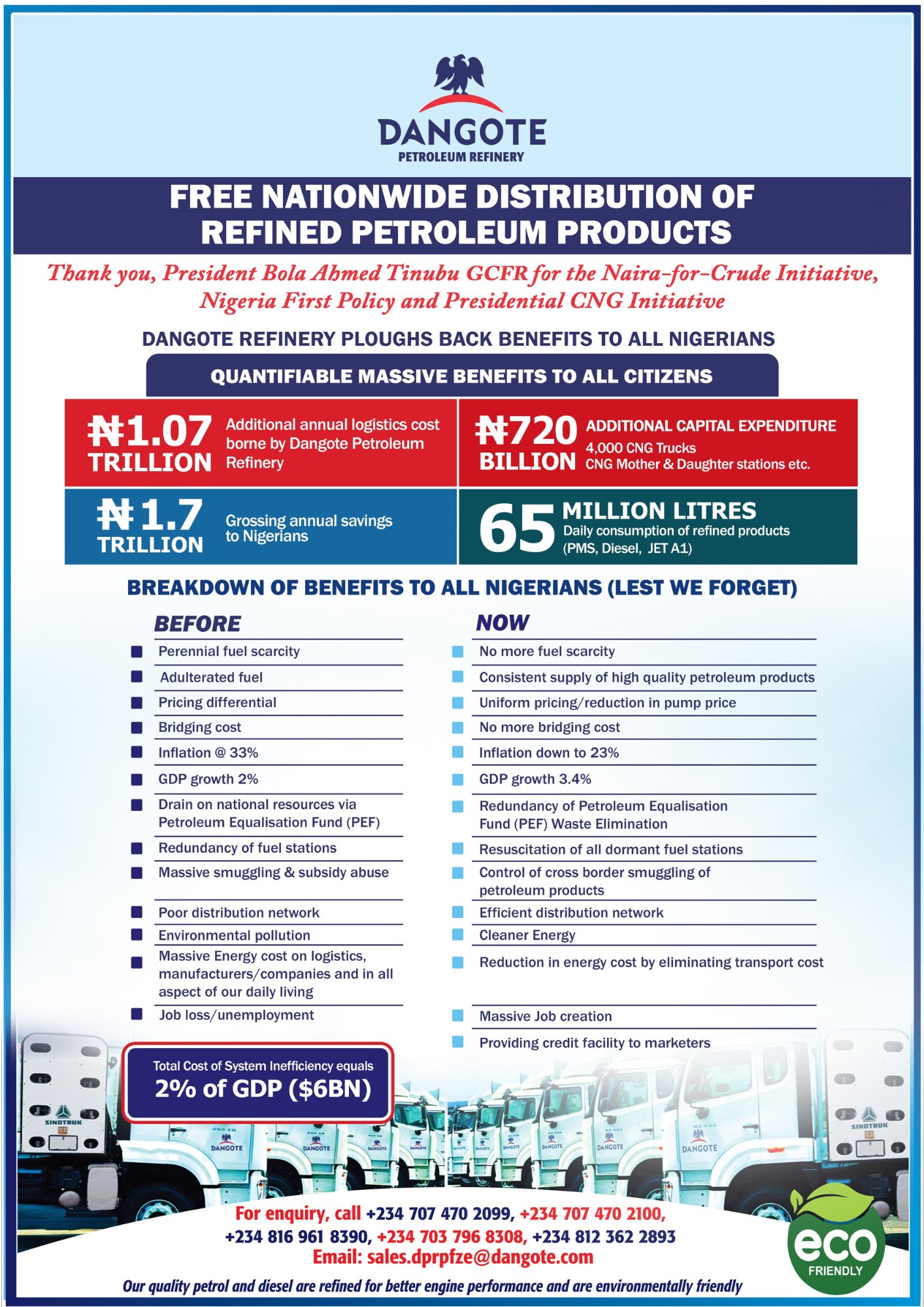
The Dangote Petroleum Refinery says it will bear over ₦1.07 trillion annually to cover the logistics cost of distributing refined fuel products free of charge to filling stations and large-scale consumers across Nigeria.
In a statement issued on Sunday, June 29, the company said the initiative, which begins August 15, is part of efforts to ease the financial burden on fuel marketers, slash pump prices, and help reduce inflation.
“This bold step will see the privately-owned refinery absorb over N1.07tn annually in fuel distribution costs.
“The initiative is also poised to significantly benefit over 42 million Micro, Small and Medium Enterprises by reducing energy costs and enhancing profitability,” the statement read.
To facilitate this ambitious plan, Dangote Group said it is investing ₦720 billion to deploy 4,000 Compressed Natural Gas-powered trucks, while also building a nationwide network of ‘mother and daughter’ CNG stations.
With Nigeria’s daily fuel demand standing at 65 million litres, including 45 million litres of petrol, 15 million litres of diesel, and 5 million litres of aviation fuel, the refinery estimates an average of ₦45 per litre as the logistics cost it intends to fully absorb.
READ ALSO: Dangote’s Fuel Delivery Plan Lifts Burden Off Marketers — IPMAN
According to the company, the programme aims not only to eliminate middlemen-related bottlenecks but also to promote a more environmentally friendly and efficient fuel distribution system.
“The initiative is also expected to resuscitate dormant filling stations, fostering job creation in the process.
“Over 15,000 direct jobs are projected to be created across the logistics chain, including drivers, station managers, and attendants at the CNG stations,” the statement added.
The company also sees the project as a long-term strategy to support Nigeria’s economic development, noting that lower distribution costs will ultimately reduce production expenses for businesses, improve consumer prices, and contribute to economic growth.
Additionally, the refinery said the direct distribution approach would help reduce cross-border fuel smuggling and ensure better fuel availability nationwide.