
Nigeria’s political and economic tensions deepened this week, reflecting a nation bracing for high-stakes change.
In Plateau State, armed violence resurfaced with the killing of 15 people, exposing the failure of centralised security.
Meanwhile, former minister Rotimi Amaechi made a scathing call to voters to reject President Tinubu’s re-election bid, warning that continued leadership under the ruling party could intensify hardship.
The PDP dismissed the opposition coalition as unserious, even as defections continued to shift political allegiances.
At the same time, a new economic survey revealed that 83 percent of Nigerians struggle to meet basic needs, highlighting the dissonance between official data and lived realities.
The Senate approved a new $21 billion loan request from the presidency, drawing concern over Nigeria’s mounting debt burden.
Together, these stories paint the picture of a country spiraling into deeper uncertainty as 2027 approaches.
1. Gunmen Kill 14 Villagers, Policeman in Plateau
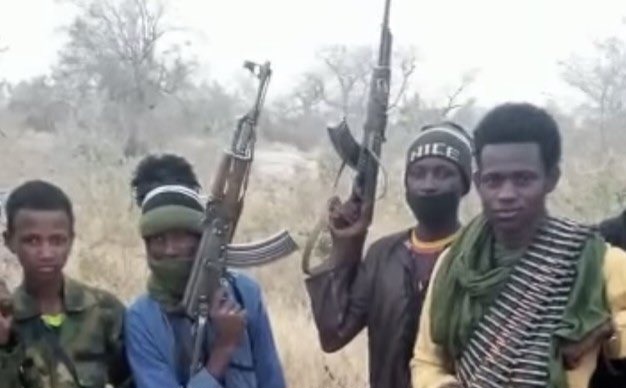
Attacks Gunmen ambushed two locations in Bokkos Local Government Area of Plateau State, killing 14 villagers and a mobile police officer. The attacks reignited demands for state policing and raised alarms about persistent insecurity in the region.
Why it Matters:
This tragedy represents the erosion of state authority in regions where violence has become routine. The calls for state police underscore a growing desperation for decentralised security. If left unaddressed, such failures could embolden self-help militias and further fracture Nigeria’s already fragile federation.
2. Amaechi to Nigerians: Stop Tinubu’s 2027 Bid or ‘Die of Hunger’

Former Transport Minister Rotimi Amaechi urged Nigerians to reject President Tinubu’s 2027 re-election bid, warning it would deepen the country’s economic suffering. He called for immediate grassroots mobilisation and voter registration to unseat the ruling party.
Why it Matters:
Amaechi’s re-entry injects volatility into Nigeria’s political terrain. His comments signal the opening salvos of what may be a bruising 2027 campaign. More importantly, they illustrate how hunger and hardship are becoming political battlegrounds, where food insecurity translates directly into electoral messaging. The opposition’s strategy is clear: weaponise economic suffering.
3. 2027: Coalition Bound to Fail, Defectors Will Return — PDP Chair Damagum

PDP Acting Chairman Umar Damagum mocked the recent ADC-led opposition coalition, claiming many members have already returned to the PDP fold. He reaffirmed PDP’s position as the only party capable of retaking power and dismissed the coalition as “an ill-fated experiment.”
Why it Matters:
The PDP’s response reveals a mix of confidence and anxiety. Publicly ridiculing the coalition may boost morale, but it also exposes internal insecurity about its relevance. The real takeaway is the deep fragmentation within Nigeria’s opposition ranks. If unity remains elusive, the ruling party could waltz into 2027 unchallenged, despite growing unpopularity.
READ ALSO: Nigeria on the Brink: A Nation in Crisis, A Government on Trial
4. 83% of Nigerians Struggle With Food, Rent, Healthcare — Report

A report by Comercio Partners laid bare the disconnect between Nigeria’s glowing economic statistics and harsh lived realities. While official inflation rates decline, 83% of Nigerians say affording food, rent, and healthcare has become significantly harder. Over 94% report rising prices, but less than 40% have seen any salary increase.
Why it Matters:
This is a damning indictment of policy without impact. “Growth” in GDP is meaningless if it immiserates the majority. The statistics signal rising disillusionment and could become political dynamite ahead of 2027. If left unchecked, such disparities will continue to breed resentment, fertile ground for populism, unrest, and social fragmentation.
5. 2025 Budget: Senate Approves Tinubu’s $21bn Loan Request, Additional $347m

Despite an already ballooning debt profile, the Nigerian Senate approved President Tinubu’s request to borrow an additional $21.89 billion for the 2025–2026 fiscal cycle. The funds will be used to plug budget gaps and finance infrastructure like the Lagos-Calabar Coastal Highway. Nigeria’s public debt now exceeds ₦121 trillion.
Why it Matters:
This loan package pushes Nigeria further into what economists call a “debt spiral” — borrowing to service existing obligations. While infrastructure needs are real, the sustainability of this debt remains questionable. With over 83% of Nigerians struggling economically, the optics of unchecked borrowing could become a serious electoral liability for Tinubu.
Conclusion:
This week’s events reveal a nation drifting further from cohesion. Insecurity festers in the countryside, economic despair tightens its grip on households, and political elites play musical chairs around coalitions and party structures. The approval of massive new loans without corresponding public investment transparency only worsens public mistrust.
Yet, amid the darkness, Nigeria’s 2027 election looms as both a threat and an opportunity. The forces of opposition are awakening, though disorganised. The ruling party remains confident but carries the weight of a disillusioned populace. What is clear is that Nigeria cannot continue with business as usual. Without structural reforms, in security, economics, and politics, 2027 may not just be another election, but a national reckoning.