
When Bola Tinubu signed the Electoral Act 2026 into law, one provision stood out; electronic transmission of election results.
It may sound technical. It is not.
It comes down to one simple question:
After your vote is counted at your polling unit, how does that result travel; and can it change along the way?
That question sits at the heart of Nigeria’s democracy.
What The Law Actually Says
The new law allows the Independent National Electoral Commission (INEC) to electronically transmit results from polling units to its Result Viewing Portal (IReV).
But here is the key detail:
The Act gives INEC the authority to determine the mode of transmission, based on technical feasibility and guidelines it may issue.
In plain terms:
Electronic transmission is permitted.
It is not made mandatory in all circumstances.
That distinction, permission versus obligation, is where the debate lies.
Is Real-Time Upload Compulsory?
No.
The Electoral Act 2026 empowers INEC to use electronic transmission, but it does not explicitly require instant, real-time upload from every polling unit in every election.
INEC retains discretion.
This means the commission can decide when and how to deploy electronic transmission, depending on infrastructure, logistics and operational readiness.
Supporters say flexibility is necessary in a country with uneven network coverage.
Critics argue discretion leaves room for inconsistency — and potentially manipulation.
How Election Results Currently Move
To understand the debate, it helps to know how results travel today:
1. Voting takes place at the polling unit.
2. Votes are counted openly.
3. Results are recorded on official forms (Form EC8A).
4. The forms move to Ward collation centres.

5. Then to Local Government collation centres.
6. Then to State collation centres.
7. Finally, to the National collation centre (for presidential elections).
At each stage, figures are manually entered and announced.
Critics say that if irregularities occur, they often happen during this physical movement and re-entry of figures.
Electronic transmission aims to reduce that risk by creating an immediate digital record directly from the polling unit.
READ ALSO: Why I Signed Electoral Act Amendment — Tinubu
Manual vs Electronic: A Simple Illustration
Imagine you run a small business.
At closing time, you calculate your sales.
Manual method:
You write the total on paper and send someone to deliver it physically to your head office. Along the way, delays or alterations are possible.
Electronic method:
You snap the summary and send it instantly online. It creates a digital record that is time-stamped and harder to tamper with.
That is the core difference.
Manual collation depends on physical movement.
Electronic transmission creates a direct digital trail.
Can Nigeria Handle Nationwide Real-Time Upload?
Nigeria has over 170,000 polling units, including remote communities with weak or nonexistent network coverage.
Major cities have strong connectivity. But rural areas in parts of the North East, riverine Niger Delta and mountainous regions face signal challenges.
For seamless nationwide real-time transmission, the country would need:
Reliable internet access everywhere
Functional smart devices at every polling unit
Stable electricity or backup power
Strong cybersecurity systems
Proper training for electoral officials
The question is not whether Nigeria has technology.
The question is whether the infrastructure is consistent enough nationwide to guarantee smooth uploads everywhere on election day.
What Civil Society Groups Want
Many civil society organisations are calling for stronger guarantees. They want:
Mandatory real-time electronic transmission from every polling unit
Automatic upload before physical movement begins
Public access to uploaded results for transparency
Their argument is simple: once results are uploaded instantly and publicly, opportunities for alteration shrink significantly.
The Political Divide
Many opposition parties strongly support compulsory real-time transmission, arguing that risk increases once results leave polling units physically.
However, some political actors warn that forcing mandatory uploads without full technical readiness could create confusion if devices fail or networks collapse.
They argue that disputed failed uploads could generate even greater tension.
What This Means For You
For the average voter, this debate is not about software or servers.
It is about confidence.
When you vote in your community, you want assurance that the result announced at your polling unit is the same result recorded at the final collation centre.
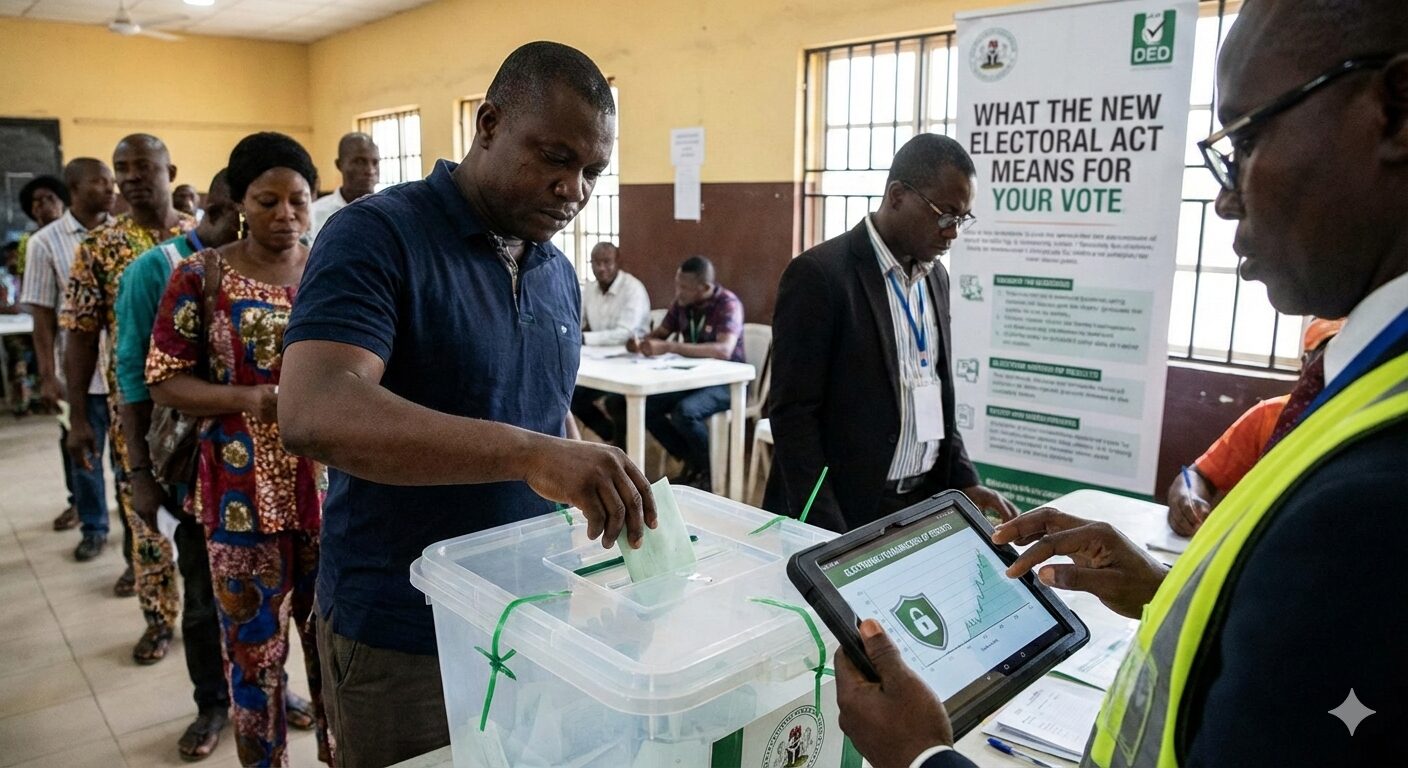
Electronic transmission promises speed and transparency.
Manual collation relies more heavily on human processes.
The new Electoral Act keeps electronic transmission in place, but leaves the final decision on implementation to INEC.
As Nigeria prepares for 2027 elections, the central question remains:
Should the law compel instant electronic transmission everywhere, or should flexibility remain in a country with uneven infrastructure?
At its core, the debate is about trust.
And in any democracy, trust is everything.