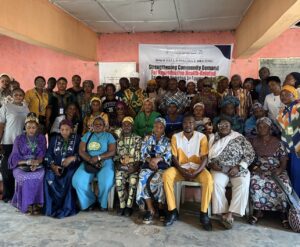
The Leadership Initiative for Youth Empowerment (LIFE) has sensitized Lagos residents and community stakeholders on sexual and reproductive health and rights (SRHR), family planning and policies guiding reproductive healthcare.
The sensitization was held on Thursday, September 3, 2026, at the Town Hall, No. 4 Lafenwa Street, Ejigbo, Lagos, with participants from Ejigbo, Alimosho, Mushin and Isolo communities.
The programme, themed “Strengthening Community Demand for Reproductive Health-Related Laws and Policies in Lagos State,” was supported by Pamoja.
LIFE Programme Officer, Obinna Nwankwo, addressed misconceptions and social barriers surrounding reproductive health, urging participants to seek accurate information, access appropriate healthcare and challenge stigma that discourages people from seeking care.
Nwankwo explained that family planning helps prevent unintended pregnancies and enables individuals and couples to determine the number and spacing of their children, while safe termination of pregnancy concerns an existing pregnancy that meets applicable legal and medical indications for termination.
He said it involves an evidence-based method appropriate to the pregnancy’s duration and circumstances, provided by a suitably skilled healthcare professional in line with applicable medical and legal requirements.
Such indications may include circumstances where continuing a pregnancy poses a serious threat to the woman’s life or health, subject to clinical assessment and the law.
READ ALSO: LIFE Trains Lagos Health Workers to Tackle Abortion Stigma, Improve Care
He also explained the Lagos State Guidelines on Safe Termination of Pregnancy for Legal Indications, commonly known as the STOP Guidelines, which were developed to guide healthcare providers on termination of pregnancy within the applicable legal framework.
The 40-page guidelines were launched by the Lagos State Government in June 2022, but implementation was suspended in July 2022 following public controversy. Health advocates renewed calls for their reinstatement in 2026.
The session was highly interactive, with participants asking questions and seeking clarification on reproductive health, family planning and the STOP Guidelines. The questions provided an opportunity to address misconceptions and clarify concerns around the issues discussed.
Nwankwo also cautioned against misinformation and unsafe practices, particularly reliance on unqualified providers.
The sensitization highlighted fear, stigma, peer pressure, family judgment, religious and cultural beliefs, and negative attitudes from some healthcare providers as barriers to accessing reproductive healthcare.
Participants were also enlightened on victim-blaming, particularly in cases involving sexual violence and unintended pregnancy, with emphasis on supporting survivors rather than judging them over their clothing, movements or circumstances.
Mrs. Olabisi Atewogbola, a participant, commended the initiative, saying improved public understanding of reproductive health policies could help dispel misconceptions surrounding the STOP Guidelines.
LIFE urged participants to share the knowledge gained with their communities and through social media to promote accurate information, informed decision-making and stronger community engagement on reproductive health.