
This week, Nigeria’s political landscape was rocked by explosive revelations, leadership turmoil, and disturbing displays of impunity. A former governor exposed the deep rot in the nation’s electoral system, while in Lagos, a dramatic power struggle saw the return of a once-ousted Speaker.
In Rivers, a battle over annulled local government elections intensified, exposing governance rifts. Meanwhile, Nigerian Air Force personnel violently stormed an electricity company’s headquarters over a power cut, raising alarms over military lawlessness. At the National Assembly, a proposed bill threatens to strip INEC of its authority over political party registration, while the Senate’s suspension of Senator Natasha Akpoti-Uduaghan ignited outrage over political suppression.
At the heart of it all, Nigeria’s institutions appear to be in freefall—captured by money, plagued by weak governance, and increasingly hostile to accountability. Is this a turning point, or just another chapter in the country’s long history of political dysfunction?
1. ‘Elections Are Bought—INEC, Security Forces, Voters All Have a Price’ – Udenwa

Former Imo State Governor Achike Udenwa has delivered a scathing indictment of Nigeria’s democracy, revealing that politicians routinely buy election officials, security agencies, and even voters. He lamented that money, rather than competence, determines leadership, keeping the country trapped in cycles of corruption and underdevelopment.
Why It Matters:
Udenwa’s words confirm what many Nigerians have long suspected—elections are not won, they are bought. If the political system is for sale to the highest bidder, governance becomes a business transaction, where public officeholders prioritize personal gain over national progress. Without urgent electoral reforms, Nigeria’s democracy risks becoming a hollow shell, where leadership is determined by financial muscle rather than merit.
2. Lagos House of Assembly’s Power Play—Obasa Returns as Speaker in Stunning Reversal

In a dramatic twist, Mudashiru Obasa has reclaimed his position as Speaker of the Lagos State House of Assembly following the resignation of his successor, Mojisola Meranda. This comes just months after lawmakers voted him out in a political shakeup, only for shifting alliances to pave the way for his return.
Why It Matters:
Obasa’s reinstatement underscores the fluid and transactional nature of Nigerian politics, where loyalty is dictated by shifting power dynamics rather than principles. The speed with which he returned raises serious questions about the credibility of legislative processes and whether lawmakers truly serve the people or operate at the mercy of external influences.
3. Rivers Assembly Issues Final Ultimatum Over Annulled Elections—A Brewing Political War
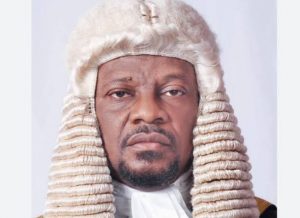
The Rivers State House of Assembly has issued a final ultimatum to the state electoral commission (RSIEC) over its failure to respond to an inquiry regarding the Supreme Court’s annulment of the October 2024 local government elections. Lawmakers suspect electoral fraud and are demanding accountability.
Why It Matters:
This battle isn’t just about a disputed election—it’s a proxy war in the larger political struggle between Governor Siminalayi Fubara and his rivals. The standoff could escalate into a full-blown crisis, with implications for both state and national politics. As Rivers remains a key economic and political hub, instability there could ripple across the country.
READ ALSO: Nigeria’s Fragile Politics: Old Wounds, Electoral Crisis, Party Turmoil, and Power Struggles
4. Armed Military Raid Over Power Cut—NAF Officers Storm Ikeja Electric, Assault CEO

In a shocking show of force, armed Nigerian Air Force personnel stormed Ikeja Electric’s headquarters in Lagos after the company disconnected power to its logistics base over unpaid bills. Officers reportedly assaulted CEO Folake Soetan and other staff members before forcibly taking her into a vehicle.
Why It Matters:
This brazen act of military intimidation highlights Nigeria’s growing problem of security agencies acting with impunity. If soldiers can invade a private company over a power cut, what stops them from using force against ordinary citizens? Beyond the lawlessness, this incident also raises serious concerns about financial mismanagement—how can the military fail to pay its bills while receiving billions in funding?
5. Bill to Strip INEC of Party Registration Powers Moves Forward—Electoral Reforms or Political Manipulation?
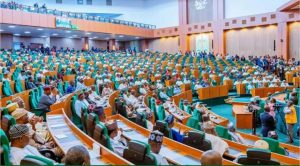
The House of Representatives is pushing forward a bill that would transfer the power to register and regulate political parties from INEC to a new independent agency. Proponents argue that this will allow INEC to focus on election management, while opponents fear it could open the door to further political interference.
Why It Matters:
While INEC has long struggled with credibility, shifting its powers to another body could either improve transparency or simply move corruption elsewhere. The real question is: Who will control this new agency, and will it be truly independent or just another tool for political elites to manipulate the system?
6. Senate Suspends Senator Natasha Akpoti-Uduaghan—Silencing a Woman Who Spoke Out?

The Senate has suspended Senator Natasha Akpoti-Uduaghan for six months over alleged violations of legislative rules. However, her suspension comes just after she publicly accused Senate President Godswill Akpabio of sexual harassment, raising concerns that this is an act of political retaliation.
Why It Matters:
This suspension sets a chilling precedent for women in Nigerian politics. If a female senator can be silenced after accusing a powerful male politician of misconduct, what message does this send to women across the country? The case also reflects the broader suppression of dissent in Nigerian governance, where those who challenge authority often face swift and severe consequences.
Conclusion: A System on the Edge
This week’s events paint a grim picture of Nigeria’s political reality. Udenwa’s blunt admission about electoral corruption exposes the rot at the system’s core, while the chaos in Lagos and Rivers reveals the fragility of state institutions. The military’s violent response to a power cut highlights a dangerous culture of impunity, and the Senate’s actions against Akpoti-Uduaghan send a troubling signal about the cost of speaking out.
As the bill to strip INEC of key powers advances, Nigeria faces yet another test: Will these changes bring meaningful reform, or will they simply serve as another tool for political elites to tighten their grip on power?
One thing is clear—Nigeria’s democracy is in crisis, and unless urgent steps are taken, the country risks spiraling further into a state where power is dictated by wealth, force, and manipulation, rather than the will of the people.