In many Nigerian households, the traditional idea of fatherhood has long followed a rigid script: the man works, provides, and remains a distant figure in the family story.
He is respected, sometimes feared, rarely emotionally available. His name is on the school forms, but his presence is often missing in the day-to-day routines.
That image is beginning to crack.
A quiet shift is happening, mostly among millennial and Gen Z fathers.
These men are questioning the kind of fathers they had, the kind of fathers they want to be, and the kind of emotional environment they want their children to grow up in.
The new Nigerian father is still providing but he is also picking up his kids from school, attending school plays, watching cartoons with them, staying up through sleepless nights, learning baby sign language, going to therapy, and not shying away from “women’s work” at home.
This is not just a parenting story. It’s a cultural rewrite.
“I grew up afraid of my dad” almost every child had this experience.
In conversations with young fathers across Lagos, one phrase comes up often: “I didn’t want my child to grow up the way I did.”
Hassan a 36-year-old banker in Lagos, says he grew up fearing his father. “He didn’t beat me much,” he says, “but the fear was always there. He didn’t talk to us unless it was correction or instruction. I didn’t know what he liked. He didn’t know what I loved. I knew to respect him, but not to approach him.”
Now a father of two boys, Hassan has taken a different path, he tells them stories every night.
He apologizes when he raises his voice unnecessarily, he has watched ‘Paw Patrol’ so many times he knows the theme song by heart. “It’s not about being perfect. I’m not. But I want my sons to know me. I want to know them too.”
Across cities, this is becoming more common.
Fathers are trying, not just to be physically around, but to be emotionally involved.
Presence over performance
For years, Nigerian men have measured fatherhood through one lens, provision. Did the children eat? Did they go to school? Were the bills paid?
But young fathers are asking different questions now:
– Am I emotionally available to my children?
– Do they feel safe around me?
– Will they call me when they are in trouble?
– Do they know I love them, without fear?
It’s not always easy, a lot of men are doing this without templates, they are navigating a new path their own fathers never walked.
Some are learning by reading books, watching YouTube videos, or talking to their partners. Others are learning on the go through trial, error, and lots of self-reflection.
Yusuf, a 30-year-old fashion designer , said becoming a dad forced him to rethink what it means to be a man. “I thought being a dad meant being tough, now I think it means being there, It means showing love, It means being honest when I don’t know what to do.”
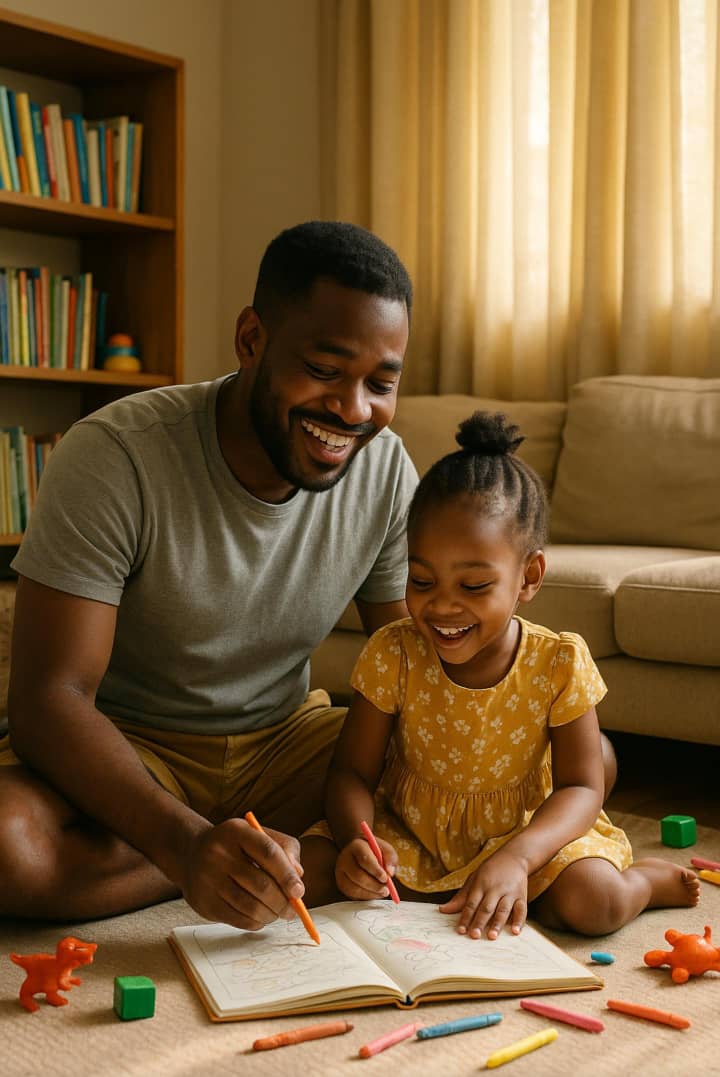
He has no problem changing diapers, cleaning up vomit, or carrying a baby strapped to his chest. His Instagram feed is filled with pictures of him and his daughter baking together, reading picture books, or just lying on the floor drawing with crayons. It’s not for show. It’s his way of healing from the father he never had.
The social media ripple effect
One of the biggest accelerators of this shift is the internet.
On Instagram, TikTok, and YouTube, Nigerian dads are seeing other fathers locally and abroad show up in ways they have never imagined.
They are seeing videos of dads doing school runs, fathers talking about mental health, men dancing at home with their daughters or carrying newborns strapped to their chests.
This exposure is giving them permission
Permission to be soft, to be involved, to redefine masculinity on their own terms.
It’s also helping fathers feel less alone in their efforts. Parenting can be isolating, especially for men who didn’t grow up seeing affection modeled at home.
But now, they are finding community sometimes in the comment section of a viral skit or on fatherhood whatsApp groups.
The feedback is validating, you are not strange, you are not alone, and you are not less of a man for caring deeply.
Pushback and pressure
Not everyone is celebrating this change though.
Many young dads still face criticism from extended family, in-laws, elders, and even strangers. Some hear comments like, “Your wife has tied you down,” or “You dey do woman work now?” Others are mocked for being “too soft” or “too modern.”
Even mothers-in-law have opinions, a young couple in my community told the story of how the husband was mocked by relatives for helping bathe the baby. “They told him his wife had used juju,” the wife said, laughing. “Just because he enjoys bonding with his child.”
These micro-criticisms reveal a deeper cultural discomfort, some people still believe a man’s role ends at provision.
Emotional availability is seen as indulgent or unnecessary, but young couples are pushing back.
They are co-parenting more intentionally.
They are building family cultures that focus on connection, not control.
They are refusing to follow scripts that never served them.
When fathers are present, children notice, children respond differently to emotionally involved fathers.
Research shows that kids with present dads often do better in school, have healthier self-esteem, and build stronger emotional intelligence.
In Nigerian homes, this is starting to show, kids are calling their dads when they are afraid, not just their mothers.
They are asking questions, seeking comfort and beginning to see both parents as caregivers not one as the nurturer and the other as the enforcer.
And that balance is changing the emotional climate of homes.
What the future might look like
The big question is whether this shift will last.
Will these new fathers stay committed when work becomes overwhelming? When economic hardship hits? When they become grandfathers?
READ ALSO: To Every Fathers Holding It Down ‐We See You
Will they raise sons who see tenderness as strength?
Will they raise daughters who expect emotional presence from their future partners?
Some of these answers are already showing up.
In younger couples, parenting is being discussed earlier, men are attending antenatal classes.
Fathers are showing up in delivery rooms. They are no longer waiting until children can talk before getting involved.
It’s a long road ahead. Deeply rooted traditions don’t die overnight. But something is changing in the Nigerian family system. Slowly, but surely.
The new Nigerian dad may still be figuring things out but he is showing up.
And that, more than anything, is what his children will remember.