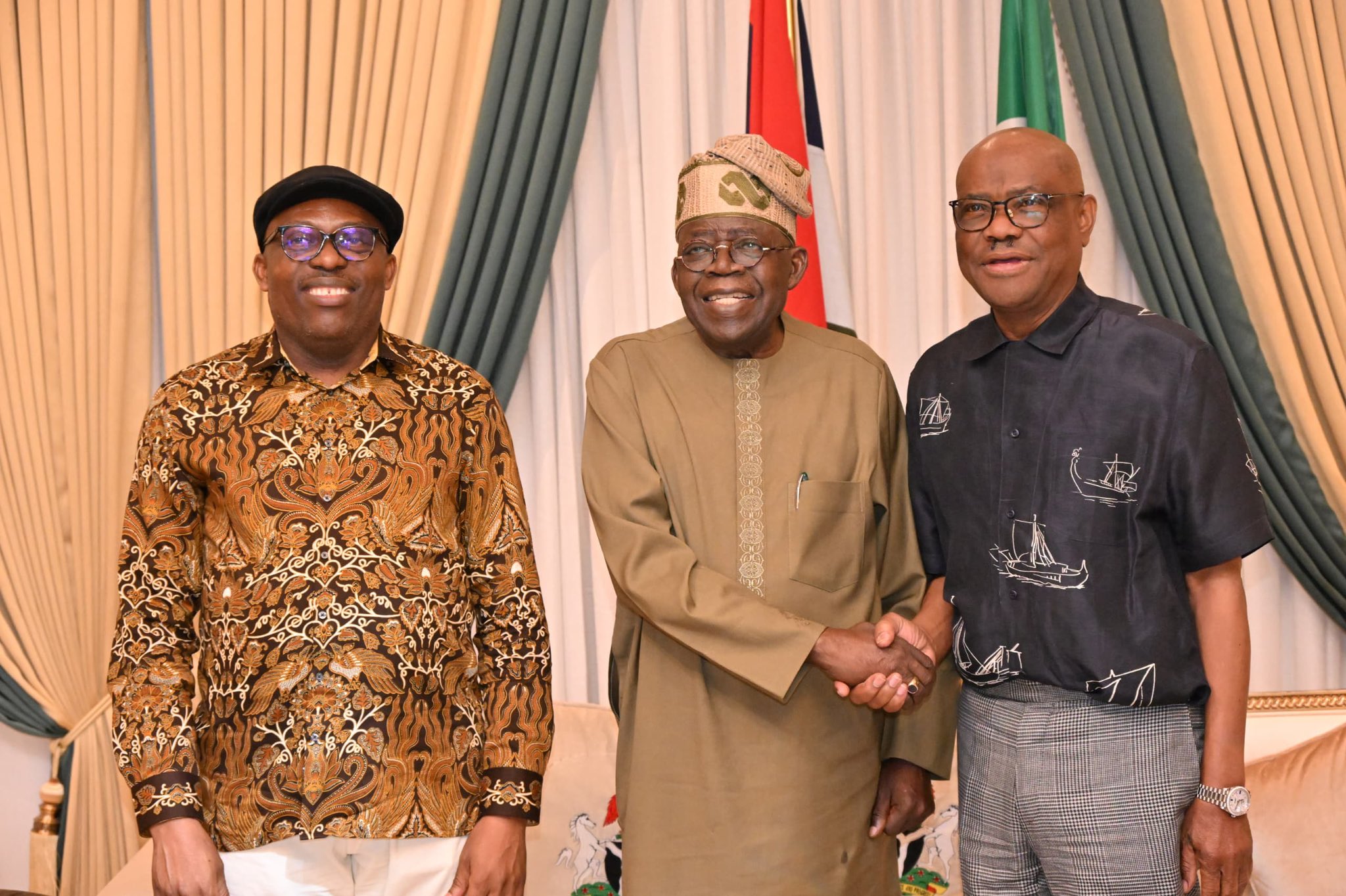
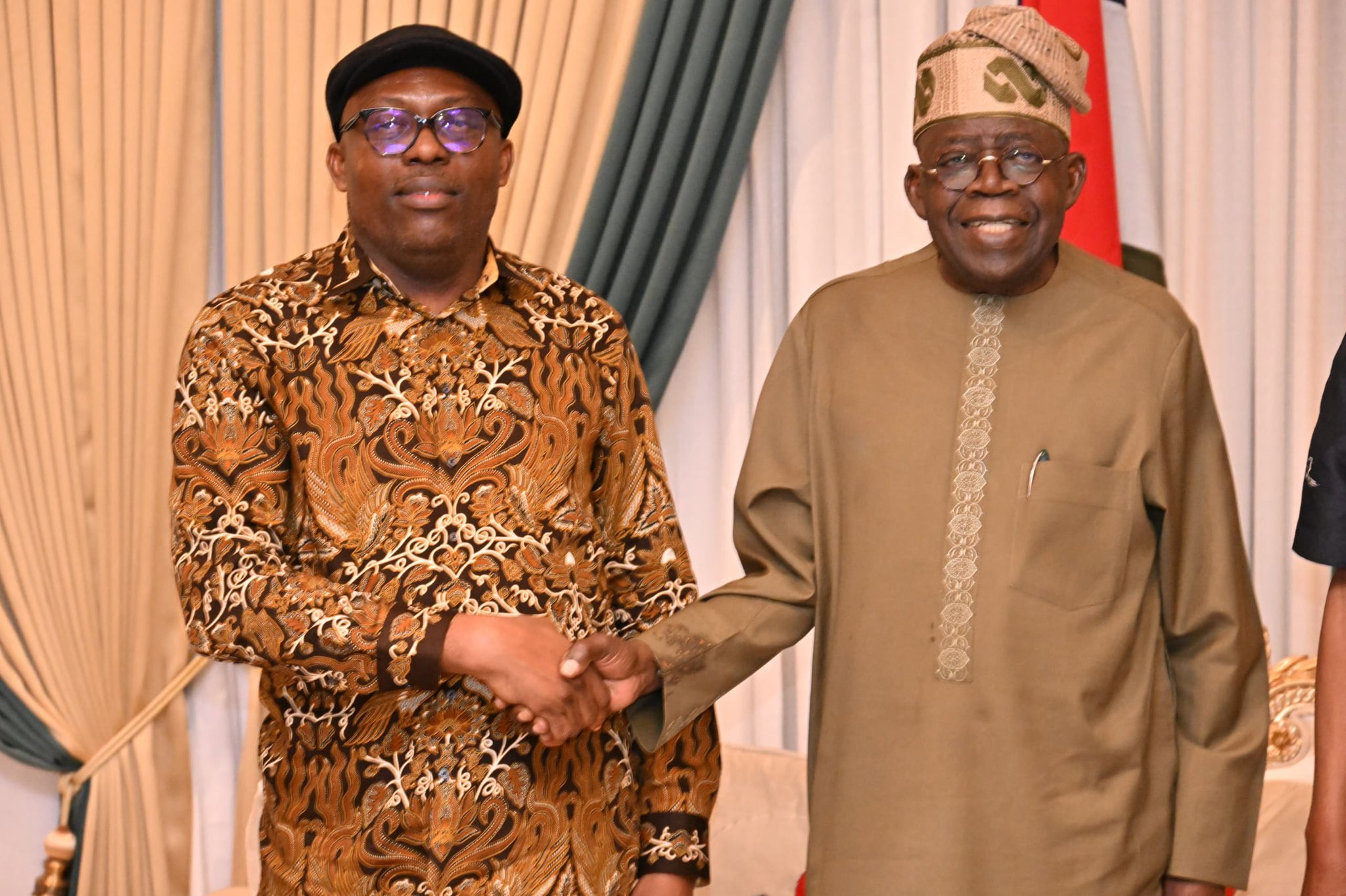
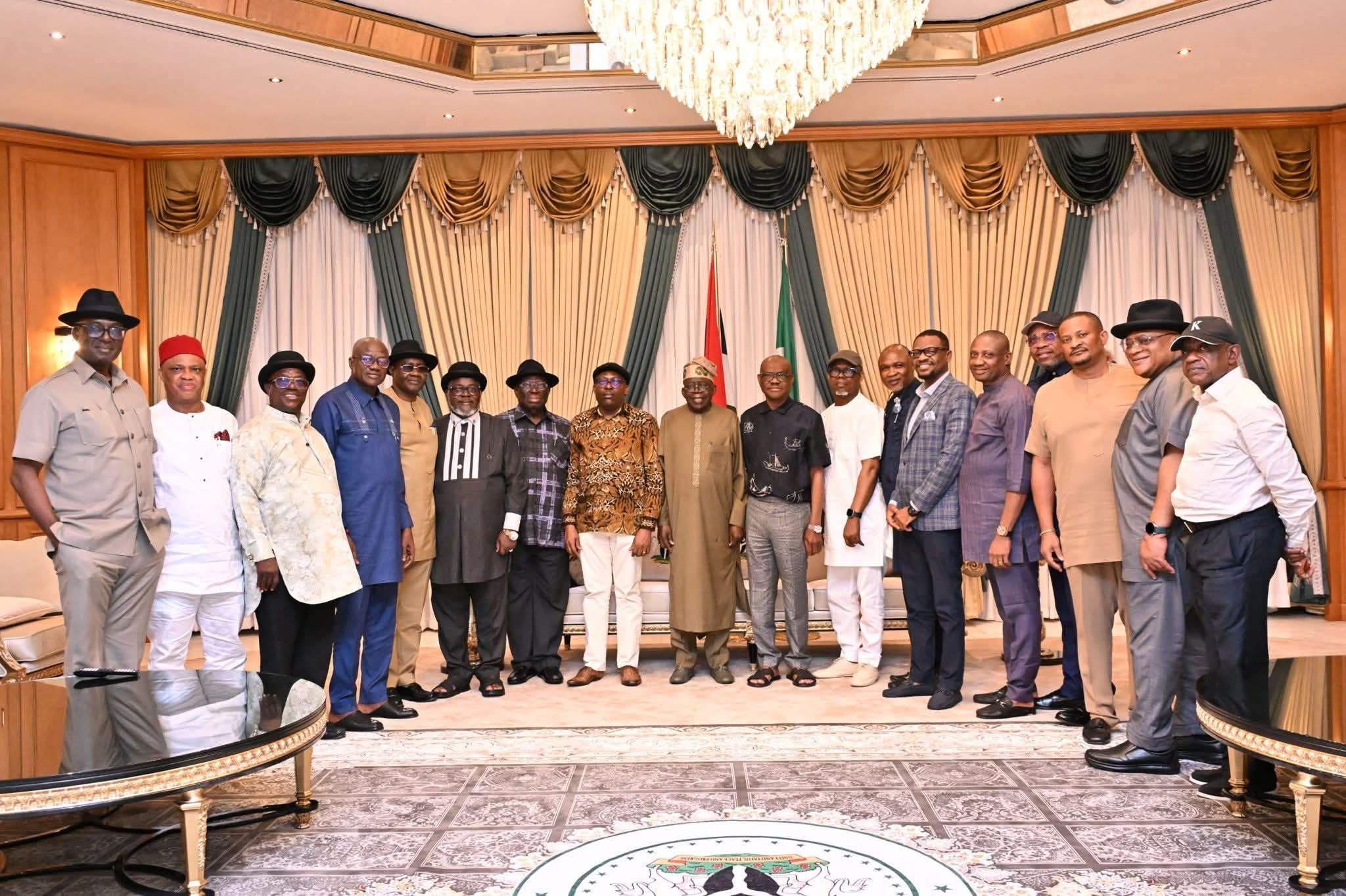
In a renewed push to resolve the lingering political crisis engulfing Rivers State, President Bola Tinubu hosted a tense but crucial reconciliation meeting on Thursday night at the Presidential Villa, Abuja.
The late-night engagement brought together central figures in the state’s months-long power struggle: FCT Minister Nyesom Wike, suspended Rivers Governor Siminalayi Fubara, embattled Speaker Martin Amaewhule, and 27 members of the fractured state House of Assembly.
Bayo Onanuga, President Tinubu’s special adviser on information and strategy, confirmed the gathering in a post on X, emphasizing its aim: peace.
“President Bola Tinubu hosted a reconciliation meeting on Thursday night at the Presidential Villa in Abuja, bringing together all the figures in the Rivers State political crisis,” Onanuga posted.
The political feud between Wike and his former protégé, Fubara, erupted publicly in 2023, escalating into a full-blown institutional crisis.
It split the state assembly down the middle and triggered violent protests, vandalism of the assembly complex, and fears over the safety of strategic oil infrastructure.
As tensions boiled over, Tinubu declared a state of emergency in March 2025, suspending both Fubara and the legislators while appointing a sole administrator to oversee the state for an initial six-month period.
READ ALSO: I Cried Watching What Fubara Once Said About Me — Wike
In an attempt to defuse the situation, the president previously held behind-closed-door talks with Fubara in London and again in Lagos earlier this month.
Thursday’s gathering appears to be a culmination of those efforts — the first time all parties involved in the crisis were brought to the same table under federal oversight.
Although no formal communique was released immediately after the meeting, insiders describe the dialogue as “frank” and “constructive,” with Tinubu reportedly pressing for a path toward political normalization before the emergency administration expires later this year.
Analysts say Thursday’s talks could mark a turning point in one of Nigeria’s most economically critical — yet politically volatile — states.
However, much hinges on whether agreements made behind closed doors translate into concrete legislative and executive cooperation on the ground.
Meanwhile, citizens in Rivers continue to await clarity on their political future — and whether this latest diplomatic effort will yield real, lasting peace.