
There are weeks in Nigerian political timeline when the country does not merely produce news, but a confession.
The week of August 3 to 6, 2026 was precisely that kind of week. Across six stories that might appear unrelated on the surface, a single, uncomfortable truth kept announcing itself: that the institutions charged with protecting Nigeria’s citizens, safeguarding its democracy and guaranteeing the integrity of its elections are, simultaneously, the same institutions most in need of protection from the political actors who control them.
Senator Orji Kalu admitted on national record that politicians routinely lie to the President about the state of the country.
Cardinal Onaiyekan warned that Nigerians may simply stay home in 2027 if they believe the result has already been decided.
Bandits massacred communities in Sokoto and Kaduna with a regularity that now barely registers as shock.
A serious constitutional question about state policing was accelerated past public debate in the shadow of an election.
Osun state government woke up to find its bank accounts frozen nine days before a governorship election.
And then the President himself, embarrassed, he said, by his own anti-corruption agency, ordered the accounts unfrozen, in a statement that raised more questions than it answered.
It was a week in which the pretences were exhausted. What remained was Nigeria as it actually is, fragile, combustible and still, somehow, standing.
1. Orji Kalu Says Tinubu Is Being Misled By Politicians

Senator Orji Uzor Kalu defended President Tinubu against criticism following his disagreement with Catholic bishops, arguing that politicians routinely misrepresent the country’s condition to the President while praising the bishops for telling him the truth.
Why it Matters:
A sitting senator openly declaring that politicians lie to the President about the state of Nigeria is not a defence of the President, rather, an indictment of the entire political class, himself included. It raises the deeply unsettling question of what decisions are being made at the highest level of government on the basis of false intelligence. The “he is being misled” trope has excused every Nigerian leader since the First Republic, conveniently absolving the man with constitutional power to seek truth. If Tinubu does not know what is happening in his own country, the problem is not merely his, it is everyone’s.
2. Nigerians May Boycott 2027 Election If APC Victory Seems Predetermined — Cardinal Onaiyekan

Cardinal Onaiyekan warned that Nigerians may abandon the 2027 electoral process entirely if the outcome appears predetermined in the APC’s favour, arguing that flawed elections produce failed governance and calling for the reform of INEC’s appointment process.
Why it Matters:
Cardinal Onaiyekan’s warning should concern every political actor, including the ruling party. Electoral legitimacy begins before polling day. When citizens conclude that power has already been allocated, voter apathy becomes rational rather than accidental. Nigeria’s challenge is therefore bigger than preventing electoral malpractice: INEC, security agencies, parties and governments must create conditions where citizens believe participation can genuinely alter political outcomes.
3. 21 Dead, 37 Abducted As Bandits Attack Sokoto Community

Bandits attacked Tsamaye community in Sokoto, leaving at least 21 people dead, abducting 37 and displacing residents, while fleeing villagers faced further deaths after boats capsized.
Why it Matters:
The tragedy exposes the devastating secondary consequences of insecurity. People are not merely killed or kidnapped; communities are forced into desperate survival choices, including sleeping in farms and fleeing through dangerous terrain. The reported failure of timely security intervention raises questions about intelligence, response capacity and troop deployment. For affected communities, government presence means little unless it can arrive before violence becomes irreversible.
4. Sowore Urges FG To Delay State Police Bill Until After 2027 Elections

AAC presidential candidate Omoyele Sowore urged the Federal Government to suspend the state police bill until after the 2027 elections, warning that placing powerful security forces in governors’ hands months before a general election created dangerous conditions for democratic manipulation.
Why it Matters:
Sowore’s argument is politically inconvenient but structurally sound. The state police bill, if enacted before 2027, would give governors, many of whom have already declared loyalty to one presidential candidate or another, command authority over security forces during a contested election. The Senate’s own anti-abuse safeguards are only as effective as the institutions enforcing them. Timing matters enormously in security reform. A good policy enacted at the wrong moment can produce outcomes its architects never intended.
5. Osun Takes Legal Action As EFCC Freezes Govt Accounts

The Osun State Government vowed to challenge in court the EFCC’s freezing of its bank accounts nine days before the August 15 governorship election, describing the move as unlawful and politically motivated to cripple government operations ahead of the poll.
Why it Matters:
The freezing of a state government’s accounts days before its election is, regardless of legal justification, an act whose timing cannot be separated from its impact. Whether or not the EFCC had legitimate grounds, the effect, disrupting governance, creating panic and casting a shadow over the incumbent’s re-election campaign, is identical to interference. In Nigerian political history, the line between law enforcement and political warfare has rarely been thinner.
6: Tinubu Directs EFCC To Unfreeze Osun Govt Accounts
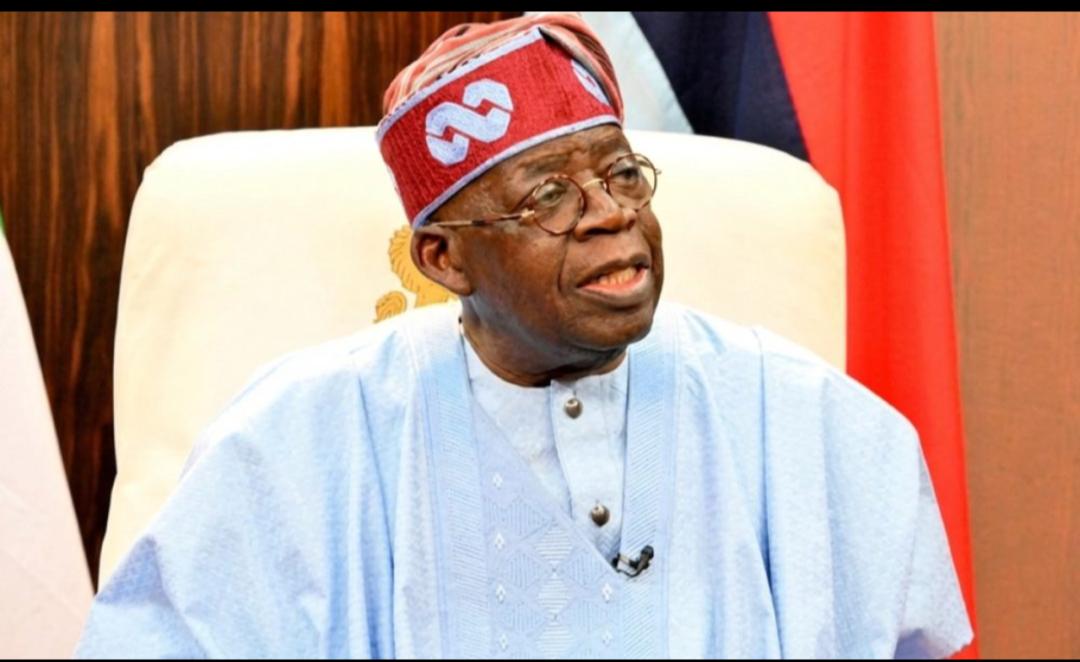
President Tinubu personally intervened to reverse the EFCC’s court-ordered freezing of Osun State’s accounts, saying he was embarrassed by the timing of the agency’s action just days before the governorship election, and directing the commission to immediately vacate the order.
Why it Matters:
The President’s intervention answers one question and raises several others. If Tinubu could order the accounts unfrozen, the EFCC’s independence is more conditional than institutional. If he did not authorise the freezing, who did, and why? His statement that he is “deeply embarrassed” by actions taken by his own agency, without his knowledge, describes either a President disconnected from his own government or one who needed political cover before an election. Neither answer is reassuring.
Conclusion
Six stories. One republic. And beneath all of them, the same question that Nigeria cannot seem to resolve: who, precisely, is in charge, and of what?
Nigeria is approaching another consequential electoral cycle with unresolved questions about security, governance, accountability and trust. The danger is that political competition could consume the institutions meant to referee it.
The priority should therefore be bigger than winning 2027: it should be preserving enough public confidence in Nigeria’s democracy for Nigerians to believe that their votes, their security and their public institutions still matter.