
…Initiative expands to Eti-Osa schools as organisation strengthens efforts to tackle period stigma through comic-based learning and teacher-led education
The Women’s Rights and Health Project (WRAHP) has reported reaching more than 3,000 students across four local government areas of Lagos State through its menstrual health education initiative, marking a significant milestone in efforts to improve adolescent health awareness and eliminate stigma surrounding menstruation.
The latest phase of the intervention took place in Eti-Osa Local Government Area, where WRAHP engaged students in three schools as part of its ongoing Period Comic Initiative, an educational programme designed to equip adolescents with accurate menstrual health information while promoting understanding and shared responsibility among boys and girls.
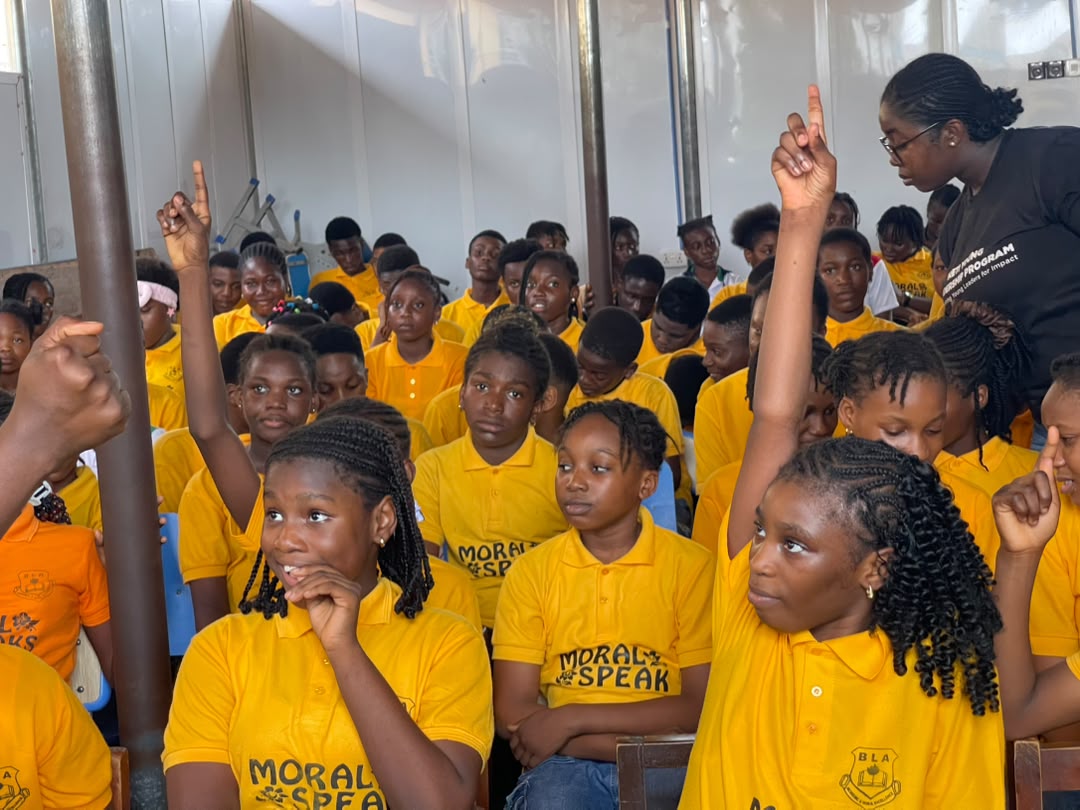
Students participate in WRAHP’s Period Comic Initiative during a menstrual health education session at one of the participating schools in Eti-Osa Local Government Area, Lagos State.)
The schools engaged on Friday, November 20, 2026, were Exceeding Grace School, Beaming Leaders Academy and Success Link Bridge.
The exercise represents another stage in WRAHP’s wider intervention across Oshodi-Isolo, Eti-Osa, Badagry and Ikorodu, implemented through its Ireti Young Leadership Programme under the Scaling-up Menstrual Health Management Initiative, with support from the Aspire Coronation Trust (ACT) Foundation.
The 12-month project, running from May 2026 to April 2027, seeks to reach 3,000 adolescent girls and boys in secondary schools, using interactive comic sessions and practical discussions to improve menstrual health knowledge, challenge misconceptions and promote positive attitudes towards menstruation.
From Badagry to Ikorodu and Eti-Osa
The latest outreach builds on earlier engagements documented by First Daily as WRAHP extended the intervention across the participating local government areas.
In Badagry, the organisation conducted sessions on October 14 across Cornel Holy Child School, St. Michael Alabstar’s College and King Star Schools, reaching 577 students, comprising 337 girls and 240 boys.
Beyond student participation, 13 teachers from the three schools were trained as Menstrual Health Management Ambassadors to sustain the programme’s educational objectives.
[Read First Daily’s Badagry report]
The intervention subsequently moved to Ikorodu, where WRAHP engaged students at Oreyo Senior Grammar School, Igbogbo, and Reri Junior Secondary School, Oreta, on November 18.
The two schools had combined target enrolments of 1,400 students, with 900 targeted at Oreyo Senior Grammar School and 500 at Reri Junior Secondary School.
[Read First Daily’s Ikorodu report]
With the conclusion of the Eti-Osa activities, WRAHP says the initiative has reached more than 3,000 students and 45 teachers across the four participating local government areas.
The progression of the intervention reflects an effort to move menstrual health education beyond occasional awareness campaigns towards a coordinated school-based programme with measurable reach and structures for continued engagement.
Using Comics to Challenge Menstrual Stigma
A defining feature of the intervention is its use of comic-based learning to make menstrual health education more accessible and relatable to young people.
Rather than relying solely on conventional classroom lectures, the Period Comic Initiative employs illustrated stories, interactive learning and practical demonstrations to help adolescents understand menstruation, puberty and personal hygiene.
During the Eti-Osa engagements, facilitators explained the physical and emotional changes associated with adolescence, demonstrated the appropriate use of sanitary pads and discussed hygienic disposal practices.
The deliberate inclusion of boys in the sessions is particularly significant to the programme’s objective of challenging harmful stereotypes and changing attitudes towards menstruation.
By encouraging boys to participate in conversations traditionally regarded as exclusively female, WRAHP is seeking to reduce teasing, misinformation and embarrassment while promoting empathy and respect among students.
READ ALSO: WRAHP Takes Menstrual Health Education To Ikorodu Schools, Targets 1,400 Students
The approach recognises that menstrual stigma cannot be effectively addressed by educating girls alone. Boys, teachers and the wider school community also have important roles in creating environments where menstruation is understood as a natural biological process.
WRAHP Executive Director, Bose Ironsi, underscored this philosophy, stressing the importance of collective understanding in achieving lasting change.
“Menstrual health is not just a girls’ issue. When boys and girls learn together, myths lose their power and schools become more supportive places for everyone. That is why this initiative brings both into the conversation,” she said.
Beyond Awareness: Building Sustainable School Support
Beyond providing information, the intervention incorporates practical assistance and capacity building to ensure that students can translate the knowledge acquired into everyday menstrual health practices.
Following the education sessions, participating female students received sanitary kits to improve their access to essential menstrual hygiene materials.
The organisation has also trained 45 teachers across the four local government areas as Menstrual Health Management Ambassadors.
The teachers are expected to serve as peer educators, provide guidance to students and organise step-down sessions to reinforce the lessons delivered during the outreach activities.
This component is particularly important to the sustainability of the intervention, as it places trained personnel within the schools to continue providing accurate information and support after the project facilitators have concluded their engagements.
It also creates opportunities for students to approach trusted teachers with questions or concerns relating to puberty, menstruation and personal hygiene without fear of embarrassment or discrimination.
Sustaining the Gains
As the initiative progresses towards its scheduled conclusion in April 2027, WRAHP says it will continue monitoring activities in participating schools to assess the impact of the intervention and support the MHM Ambassadors in sustaining their step-down sessions.
The monitoring process is expected to provide insights into the extent to which the programme is improving students’ knowledge, influencing attitudes and strengthening school-based support systems for menstrual health management.
Ultimately, the initiative seeks to address more than the lack of access to menstrual health information and hygiene materials. It is also confronting the social attitudes that often make menstruation a source of shame, exclusion and discrimination for adolescent girls.
Through its combination of comic-based education, practical demonstrations, sanitary kit distribution and teacher capacity building, WRAHP is working towards a school environment where girls can manage menstruation with dignity and boys understand the importance of supporting their female peers.
The broader message is that menstrual health education must extend beyond awareness to sustained understanding, behavioural change and institutional support.