
Nigeria’s political landscape this week reflected a nation grappling with two parallel realities: an accelerating race toward the 2027 elections and a worsening security crisis that continues to test public confidence in government institutions.
The Independent National Electoral Commission (INEC) launched an investigation into an alleged voter registration data leak, raising fresh questions about electoral integrity and data protection.
Former Labour Party vice-presidential candidate Yusuf Datti Baba-Ahmed revealed that sympathy for Peter Obi influenced his decision to join the 2023 ticket.
Meanwhile, insecurity continued to dominate national attention. In Oyo State, gunmen reportedly abducted the sister of former Minister of Power Adebayo Adelabu and her twin children, while President Bola Tinubu ordered an expanded rescue operation for abducted pupils and teachers in Oriire Local Government Area.
Politically, the contest for 2027 gathered momentum as Aviation Minister Festus Keyamo urged former President Goodluck Jonathan to reject a presidential nomination offered by a faction of the Peoples Democratic Party (PDP), exposing the deepening fragmentation within Nigeria’s opposition landscape.
1. INEC Launches Probe Into Alleged CVR Data Leak
INEC is investigating the alleged unauthorised release of a candidate’s voter registration data, traced to an insider using valid credentials, and released by Lere Olayinka, media aide to the Minister of the Federal Capital Territory, Nyesom Wike, amid a politically charged dispute over eligibility in the FCT.
Why It Matters:
The person who posted the data is an aide to a minister for the ruling APC government, and the data he allegedly weaponised belonged to an opposition member. Who else’s records has he accessed? How broadly is INEC’s database open to partisan actors? This lands against already catastrophic public trust — INEC is still haunted by the disputed 2023 elections and controversy over its chairman’s allegedly partisan X account. For many Nigerians, this confirms a fear they never stopped holding. The real challenge for INEC is not only identifying how the data was released but also convincing citizens that electoral records cannot be weaponised for political advantage.
2. Datti Baba-Ahmed Says Sympathy Influenced Partnership With Obi

Former Labour Party VP candidate Datti Baba-Ahmed disclosed that three senior politicians rejected Peter Obi’s 2023 partnership overtures, saying sympathy motivated his own decision to join the ticket.
Why It Matters:
Datti’s remarks provide a revealing glimpse into the calculations that shaped the Labour Party’s rise in 2023. Beyond personal loyalty, his comments highlight how established political elites initially underestimated Obi’s appeal. They also suggest that opposition alliances often emerge from circumstance rather than ideological alignment. However, concerns are mounting over his intent behind this disclosure and questions about loyalty, independence, and coalition-building.
3. Gunmen Kidnap Adelabu’s Sister, Twin Children In Ibadan

Unknown gunmen reportedly abducted the sister of former Minister of Power and APC governorship aspirant Adebayo Adelabu, along with her twin children, in Ibadan, further deepening security concerns across Oyo State.
Why It Matters:
When kidnapping reaches into the families of politically influential figures in a state capital, not remote bushland, but urban Ibadan, it shows a catastrophic deterioration of public safety. It also demonstrates how insecurity increasingly cuts across social and political boundaries. Coming shortly after the abduction of pupils and teachers in Oriire, the attack reinforces perceptions that criminal networks are expanding their reach. When kidnapping reaches the relatives of former federal ministers in broad daylight, no citizen can consider themselves outside the arc of danger.
READ ALSO: Ambitions, Accusations, Accountability: A Nation In Flux
4. Tinubu Orders Expanded Rescue Operation For Oyo Victims
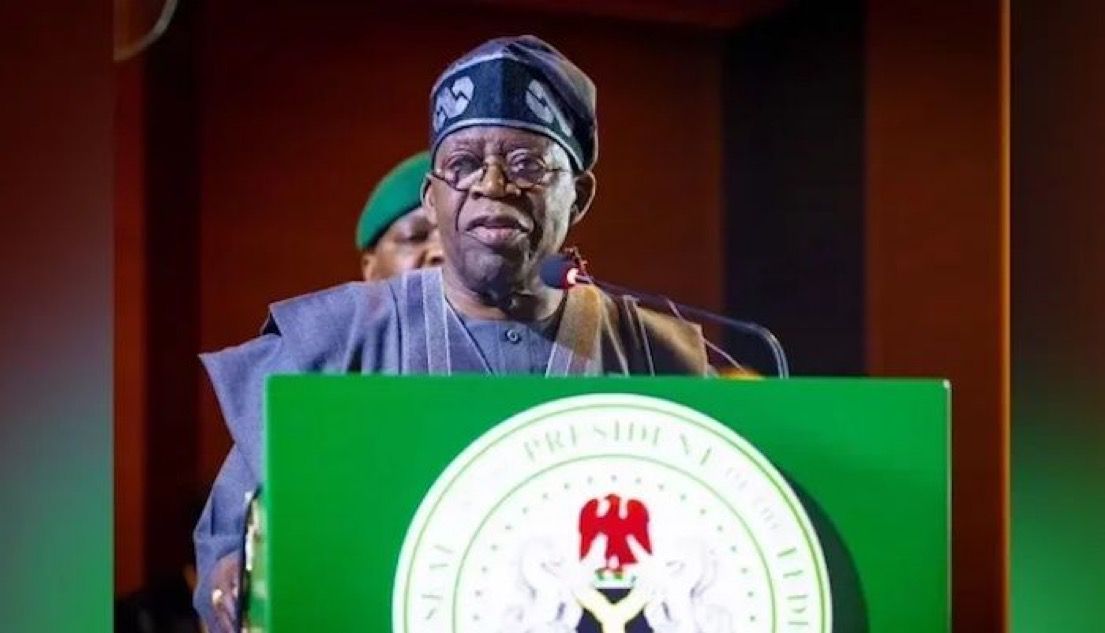
President Bola Tinubu directed security agencies to intensify rescue efforts for abducted pupils and teachers in Oyo State, while approving the deployment of 1,000 forest guards and considering a military base for the affected area.
Why It Matters:
The President’s response, weeks after the May 15 abduction, reflects both the gravity of the crisis and the criticism that federal intervention has been sluggish. Deploying forest guards and proposing a military base are welcome structural measures, but they also constitute an admission that existing security frameworks have failed. The real test lies not in the announcement but in execution: Nigeria’s recent history is littered with security deployments that arrive with fanfare but dissipate without lasting impact. Families awaiting their children’s return need results, not rhetoric.
5. Keyamo Urges Jonathan To Reject PDP Faction’s Nomination

Aviation Minister Festus Keyamo called on former President Goodluck Jonathan to reject a presidential nomination offered by a PDP faction, arguing that the group lacks legitimacy and official recognition.
Why It Matters:
Keyamo’s intervention, though framed as friendly counsel, is nakedly strategic, an APC minister stoking the opposition’s internal contradictions while appearing magnanimous toward Jonathan. The PDP’s fragmentation into competing factions, each dispensing presidential tickets without INEC recognition, reveals a party in advanced institutional decay. For Jonathan, silence carries its own risks: it invites the “clueless” narrative Keyamo deliberately resurrected. More broadly, the episode illustrates how Nigeria’s opposition space remains too fractured to mount a coherent challenge, a dynamic that suits the ruling party perfectly as 2027 draws closer.
Conclusion
This week’s events illustrated a country confronting simultaneous crises of security, governance, and political legitimacy.
While politicians and parties continue positioning for 2027, communities across Oyo are confronting the immediate realities of kidnapping and violence.
At the same time, concerns about electoral integrity, opposition fragmentation, and institutional credibility continue to shape the political environment.
The challenge for Nigeria is not merely organising another election. It is convincing citizens that democratic institutions can protect their rights, secure their communities, and earn their trust.
As Nigeria approaches another election cycle, citizens will increasingly judge leaders not by rhetoric or political manoeuvring, but by their ability to provide security, strengthen institutions and restore confidence in the future of the nation.