
The proposed directory will connect women facing rights violations to legal, protection and support services across all Local Council Development Areas, as stakeholders identify fragmented services and geographical barriers as major obstacles to accessing justice.
Stakeholders in Lagos State have proposed the development of a comprehensive, multi-agency referral directory to help women and other victims of human rights violations access legal assistance, protection and support services closer to their communities.
The proposal emerged from a multisectoral roundtable organised by the Rights Enforcement and Public Law Centre (REPLACE), with support from the Rule of Law and Anti-Corruption (RoLAC) Programme, funded by the European Union and implemented with the support of International IDEA, on Tuesday, November 24, 2026.
Held under REPLACE’s Rights in Focus initiative, the engagement focused on Women and the Administration of Criminal Justice Law of Lagos State, 2015 (Amended in 2021), bringing together representatives of government institutions, legal professional bodies, civil society organisations and other service providers to examine the challenges women face in accessing justice and develop practical responses.
A major outcome was the proposal to compile and disseminate a unified directory of organisations and institutions providing legal aid, human rights protection, psychosocial support, child protection, domestic and sexual violence response, and other essential services across all Local Council Development Areas (LCDAs) in Lagos State.
The directory, which stakeholders intend to develop within 12 months, is expected to be available in both digital and printed formats, providing contact information, service descriptions and referral channels to enable individuals and organisations to identify appropriate support providers without unnecessary delays.
The initiative is intended to address a persistent problem in the justice and protection landscape: the fragmentation of services among government agencies, professional bodies and non-governmental organisations, which often leaves victims struggling to identify where to report violations or obtain appropriate assistance.
Bridging the gaps in access to justice
Discussions at the roundtable highlighted how the absence of an effective referral mechanism can undermine the efforts of organisations already providing legal and humanitarian services.
Despite the presence of institutions such as the International Federation of Women Lawyers (FIDA), the Nigerian Bar Association (NBA) and the National Human Rights Commission (NHRC), among other service providers, women seeking assistance may still encounter difficulties navigating the system.
One challenge identified was the geographical spread of Lagos State.
A woman living in Ibeju-Lekki, for instance, may contact an organisation operating in Alimosho or be referred to an institution in a distant location such as the Lagos State University (LASU) area. The cost and inconvenience of travelling such distances can discourage follow-up or make it practically impossible for the individual to access the assistance offered.
In some instances, organisations may be unable to take up cases because the person seeking help lives outside their operational area or because another institution is better positioned to provide the required service.
Stakeholders argued that a coordinated referral arrangement would enable organisations to connect individuals to suitable service providers within or closer to their communities rather than leaving them to navigate the system independently.
The proposed directory will consolidate existing databases and contact lists maintained by organisations working in specialised areas, including sexual and domestic violence, child protection, legal aid, human rights and correctional welfare.
Participating institutions are expected to formally commit to the referral arrangement, creating a network through which cases can be transferred to appropriate organisations, with feedback mechanisms to support continuity of care.
Professional women urged to understand their legal rights
The roundtable also examined the legal framework protecting women’s rights under the Lagos State Administration of Criminal Justice Law.
Introducing the focus, Women and the Administration of Criminal Justice Law of Lagos State, 2015 (Amended in 2021), Founder of REPLACE, Felicitas Aigbogun-Brai, highlighted key provisions of the law and their implications for women’s rights, particularly in their interactions with law enforcement agencies and the justice system.
She drew attention to Section 4, which prohibits the arrest of one person in place of another in a criminal matter. The provision provides a safeguard against arrest in lieu, a practice that can expose relatives and associates of suspects to unlawful or inappropriate detention.
She also discussed the provisions on bail and the right of women to stand as sureties, drawing attention to Section 118(3), which expressly provides that no person should be denied, prevented or restricted from standing as a surety or providing security on the ground that the person is a woman.
The provision is significant in challenging discriminatory practices that may prevent women from participating in bail arrangements because of their gender.
Aigbogun-Brai further highlighted the prohibition of using arrest to resolve civil and contractual disputes, emphasising the distinction between criminal proceedings and disputes that should ordinarily be addressed through civil remedies.
Another provision she examined was Section 144, which addresses the remedies available to married women in respect of their persons and separate property. It recognises a married woman’s right to seek criminal remedies in her own name for the protection and security of her person or separate property, including in proceedings involving her husband.
The discussions were intended to help professional women understand the practical implications of these safeguards and become better positioned to inform other women about their rights and available remedies.
The engagement’s broader objective was to move beyond legal awareness by equipping women in professional groups and associations to serve as advocates and channels of information within their workplaces and communities.
Why women still struggle to seek justice
A plenary discussion on Barriers Women Face in Accessing Justice and in Reporting or Responding to Human Rights Violations, facilitated by Maryam Aliko Mohammed, explored the institutional, social and practical obstacles that discourage women from reporting violations or pursuing redress.
Mohammed, a teacher, facilitator and personal and professional development specialist, approached the session from a practical, results-oriented perspective, encouraging participants to see themselves not merely as observers of the challenges but as active contributors to the solutions.
The discussions examined how women experiencing abuse or other rights violations often turn first to informal networks before approaching formal institutions.
Community spaces, including hairdressing salons, were identified as important informal entry points where women share personal experiences, seek advice and sometimes disclose situations involving abuse or other forms of vulnerability.
This makes such community networks potentially important in identifying cases and connecting affected individuals to professional support.
Participants were encouraged to consider how these informal entry points could be linked to established service providers without compromising confidentiality, consent or the safety of individuals seeking assistance.
Mohammed also emphasised the importance of systems thinking and inter-agency cooperation, noting that complex cases often require the involvement of several service providers.
For example, a homeless mother experiencing substance-use problems may require healthcare, child protection, psychosocial support, food assistance, housing and rehabilitation services. No single organisation may possess the capacity or resources to address all these needs.
The implication, she noted during the discussions, is that effective support depends on identifying the relevant service providers and establishing functional relationships through which individuals can access the different forms of assistance required.
The session also examined how fear, distrust and limited awareness of available remedies can be connected to weaknesses in public institutions and service delivery. Strengthening access to justice, therefore, requires not only educating citizens but also improving the institutions expected to protect them.
Stakeholders work on practical referral framework
The roundtable moved from identifying challenges to developing practical responses through a working session on Co-designing the Referral Framework for Human Rights Violations and Complaints in Lagos State.
The exercise focused on establishing a coordinated approach to receiving complaints, identifying cases and connecting individuals to appropriate organisations.
Participants examined entry points for receiving complaints, the minimum information required to identify and process cases, and the importance of obtaining informed consent while maintaining confidentiality and safeguarding standards.
Other areas included referral pathways, organisations responsible for receiving referred cases, feedback mechanisms, and the roles and responsibilities of participating institutions.
The exercise was designed to ensure that referrals do not end with the provision of a telephone number or the transfer of a complaint, but lead to appropriate support and a clearer understanding of what happens to each case.
The proposed framework is also expected to establish clearer coordination among participating organisations, helping to reduce duplication, improve accountability and ensure that individuals are not repeatedly sent from one institution to another without assistance.
Broad representation and implementation plans
The roundtable brought together stakeholders from different parts of Lagos State’s justice and human rights ecosystem.
READ ALSO: REPLACE Boosts Legal Awareness Among Lagos Market Women
Participating institutions and organisations included the Citizens’ Rights Centre, Citizens’ Mediation Centre, Office of the Public Defender, National Human Rights Commission, Legal Aid Council, Nigerian Bar Association, FIDA, Child Protection Network, Community Women’s Health and other civil society organisations.
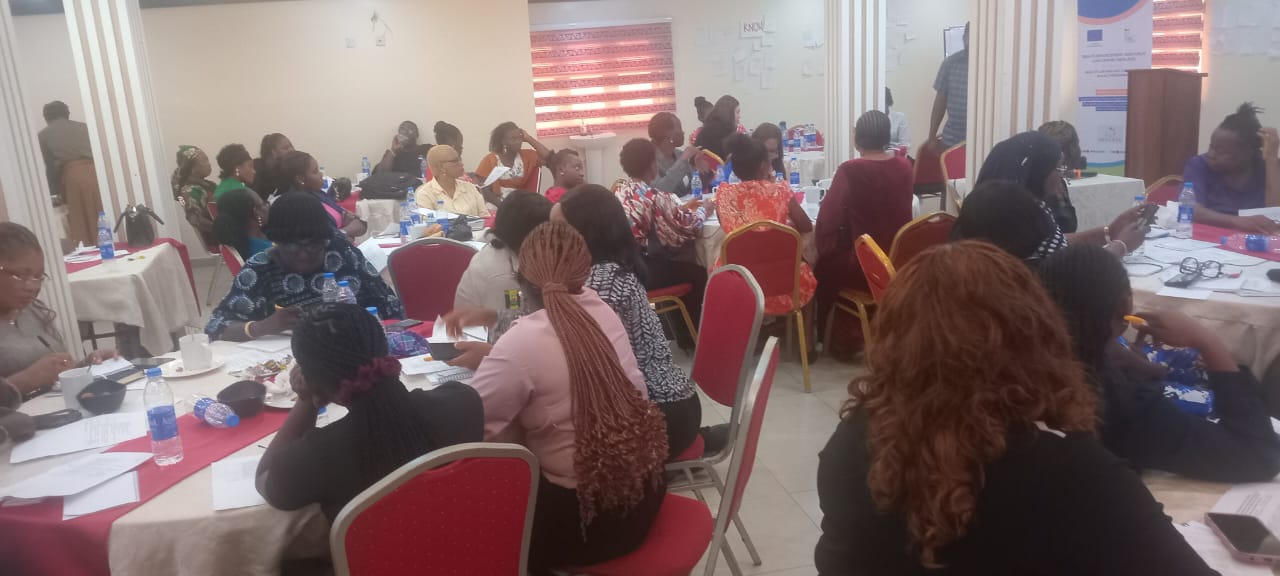
The geographical representation covered Badagry, Ikorodu, Epe, Alimosho, including Iyana Ipaja, Ikeja, Ikoyi and the Lekki-Ajah corridor, including Oniru, Jakande and Ibeju-Lekki.
This geographical spread was considered important to the proposed directory’s objective of making support services accessible across the state rather than concentrating information around organisations operating in central urban locations.
The implementation roadmap envisages three broad stages.
The first involves establishing a smaller technical working group to consolidate existing organisational databases and develop the master directory. Digital copies will subsequently be circulated among relevant government agencies, federal institutions and civil society organisations for use by their officers and networks.
The second stage will involve a formal public unveiling, including a press conference and media engagement to promote awareness of the directory. Media organisations are expected to receive digital copies and a limited number of printed editions for wider dissemination.
The third stage envisages partnerships with relevant stakeholders to support the development of a dedicated mobile application through which residents, including newcomers to Lagos, can identify appropriate assistance within their locations.
The longer-term ambition is to make the directory a widely accessible public resource, comparable in everyday usefulness to a traditional Yellow Pages, but focused on connecting people to legal, human rights and social support services.
Beyond awareness to a functioning support system
The roundtable reflects a broader recognition that the existence of laws and institutions does not automatically guarantee access to justice.
For women facing domestic violence, sexual abuse, discrimination, property-related violations or other forms of human rights abuse, the ability to identify the right institution, understand the available remedies and receive timely assistance can determine whether they successfully obtain protection.
By combining legal education with the development of a coordinated referral mechanism, REPLACE and participating stakeholders are seeking to address both sides of the challenge: ensuring women understand their rights and making it easier for them to exercise those rights.
The proposed directory will be a significant practical step if participating institutions sustain their commitments, keep their contact information current, establish clear referral responsibilities and provide reliable feedback on cases received.
Ultimately, the success of the initiative will be measured not simply by the number of organisations listed or copies distributed, but by whether a woman seeking help in any part of Lagos State can find the right assistance without being turned away, sent from one institution to another or left to navigate the justice system alone.
The engagement was held under the Rights in Focus initiative of REPLACE, with support from the Rule of Law and Anti-Corruption (RoLAC) Programme. The programme is funded by the European Union, with International IDEA supporting its implementation.