
As 2025 draws to a close, Nigeria’s political scene has been defined by dramatic shifts in power dynamics, institutional crises, and escalating realignments ahead of the 2027 elections.
The year witnessed the ruling All Progressives Congress (APC) solidify its dominance through mass defections, while opposition parties fractured amid internal disputes and strategic coalitions.
Federal interventions in state governance, legislative controversies, underscored the fragility of democratic institutions. Here are the most significant political stories of the year.
1. Declaration of Emergency Rule in Rivers State and Suspension of Governor Fubara
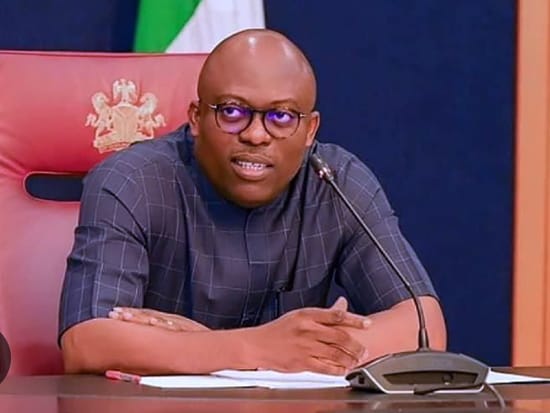
In March, President Bola Tinubu invoked Section 305 of the Constitution to declare a state of emergency in oil-rich Rivers State, suspending Governor Siminalayi Fubara, his deputy, and all state assembly members for six months.
The move, citing protracted political crisis and pipeline vandalism linked to the feud between Fubara and his predecessor Nyesom Wike, appointed a sole administrator. Critics decried it as federal overreach, while supporters argued it restored stability. The rule was lifted in September, allowing reinstatement.
2. Natasha Vs Akpabio Saga and Senatorial Suspension

Senator Natasha Akpoti-Uduaghan’s allegations of sexual harassment against Senate President Godswill Akpabio sparked national outrage.
The Senate ethics committee dismissed her petition on procedural grounds and suspended her for six months over unrelated “disruptive behaviour.”
The decision drew accusations of patriarchal impunity and highlighted gender issues in politics, with protests and lawsuits following.
3. Appointment of New INEC Chairman

Following Mahmood Yakubu’s exit after a decade, President Tinubu nominated Professor Joash Ojo Amupitan (SAN), approved unanimously by the Council of State in October.
The legal scholar’s appointment came amid preparations for off-cycle elections, including the Anambra governorship poll, raising hopes for electoral reforms.
4. Emergence of ADC as Opposition Coalition Platform

One of the most structurally interesting developments was the rise of the African Democratic Congress (ADC) as the chosen platform for an opposition coalition. Long a fringe party, the ADC became the adopted vehicle for a broad “third force”, attracting key opposition figures including Rauf Aregbesola, David Mark, Rotimi Amaechi, etc, amid PDP and Labour Party crises. The coalition also involved former Vice President Atiku Abubakar and Ex-Anambra governor Peter Obi, seeking to challenge Tinubu in 2027.
READ ALSO: ‘Do-or-Die’ Politics Undermining Nigeria’s Elections, Says Jega
5. Peter Obi and Atiku’s Defect to ADC

Late in the year, Peter Obi formally defected to the ADC in Enugu on December 31, while Atiku had earlier joined the coalition.
These moves aimed to unite fragmented opposition forces, though internal rivalries over the presidential ticket persisted.
6. Mass Defections to the APC

2025 saw unprecedented defections, with governors from Rivers, Delta, Akwa Ibom, Enugu, Bayelsa, Taraba switching to the APC.
The APC gained super-majorities in both legislative chambers, prompting fears of a de facto one-party state.
7. Collapse and Factionalism in the PDP

The PDP hemorrhaged members, shrinking to control in just four states by year’s end. Internal crises deepened with rival conventions, expulsions (including Wike and allies), and leadership battles between factions loyal to Wike and others.
8. Nyesom Wike’s Reaffirmed Support for President Tinubu

Despite PDP turmoil, FCT Minister Nyesom Wike repeatedly declared unwavering loyalty to Tinubu, crediting early backing in 2023 elections.
He warned against using Tinubu support as a bargaining chip for tickets, amid Rivers realignments.
9. Supreme Court Affirms President’s Power to Suspend Elected Officials

On 15 December 2025, the Supreme Court, in a 6–1 decision, affirmed the President’s constitutional authority to declare a state of emergency and, under that framework, temporarily suspend elected officials in crisis‑hit areas.
The court held that such powers can be used to avert a collapse of law and order but must be “limited in duration” and subject to constitutional safeguards. The case arose directly from challenges to the Rivers emergency.
Conclusion
2025 has been a year of upheaval, realignment, and judicial landmark rulings in Nigerian politics. The emergence of the ADC Coalition as a potent opposition force, coupled with the fragmentation of the PDP and the consolidation of APC power, has reconfigured the political map.
Meanwhile, constitutional controversies, especially the Supreme Court’s endorsement of presidential suspension powers, have raised profound questions about federalism and democratic norms.
As Nigeria approaches the 2026, the political terrain remains fluid. The ADC coalition’s ability to translate momentum into electoral victory, the APC’s strategy to retain power, and the PDP’s fight for survival will define the nation’s democratic future.