
Nigeria’s political and economic landscape this week reflected growing pressure on the government to demonstrate that its policies can improve citizens’ lives as the 2027 general election approaches.
A new United Nations report showed a sharp increase in multidimensional poverty, while the debate over President Bola Tinubu’s reforms intensified, with his supporters defending their long-term benefits and critics questioning their immediate costs.
Meanwhile, INEC’s listing of former minister Geoffrey Nnaji as an Enugu governorship candidate has raised questions amid pending criminal proceedings.
Cross-party support for Tinubu’s re-election is gathering momentum, even as the President plans to limit his attendance at campaign rallies.
Elsewhere, retired soldiers protested over pension calculations, highlighting continuing concerns about the treatment of former service personnel.
It was a week in which Nigeria’s political architecture, electoral, economic and institutional, was tested against the realities it is designed to govern.
1: INEC Lists Ex-Minister Nnaji For Enugu Guber Poll Amid Certificate Forgery Scandal

INEC listed former Minister Geoffrey Nnaji as the PDP governorship candidate for Enugu State in the 2027 election, despite ongoing criminal charges for certificate forgery, abuse of office and money laundering that forced his resignation from the Federal Executive Council.
Why it Matters:
INEC’s decision to list a candidate with active criminal charges over certificate forgery raises fundamental questions about the commission’s vetting authority and ethical thresholds. If the same certificate questions that forced Nnaji’s resignation from a federal cabinet position do not disqualify him from contesting a governorship, the inconsistency between executive accountability standards and electoral eligibility standards exposes a loophole that will shape pre-election litigation for months.
2: Nigeria’s Multidimensional Poverty Rate Hits 38.7% — UNDP

The UNDP’s 2026 Global Multidimensional Poverty Index reported Nigeria’s multidimensional poverty rate rose to 38.7 per cent in 2024 from 33 per cent in 2021, adding 17.9 million Nigerians to the 90.1 million already experiencing multiple forms of deprivation.
Why it Matters:
The figures reverse a decade of gains and crown Nigeria the world’s worst deteriorator among measured countries, 17.9 million newly poor is Ghana’s entire adult population. The data predates 2026, as UNDP cautions, but it covers precisely the reform years the administration defends. Bwala already conceded reforms deepened poverty; this report quantifies his admission and hands 2027’s challengers their sharpest statistic.
3: ‘Four Years Not Enough’ — Adeleke Urges Nigerians To Re-elect Tinubu

Osun Governor Ademola Adeleke, named coordinator of Tinubu’s Osun re-election campaign despite belonging to the Accord Party, publicly declared that four years was insufficient for Tinubu’s reforms to deliver results and urged Nigerians to grant the President another term in 2027.
Why it Matters:
Adeleke’s crossover completes a remarkable arc, the governor whose accounts the EFCC froze before his re-election now dances toward Aso Rock for the man who ordered the unfreezing. His coordinatorship, alongside Wike’s and Soludo’s, shows the rainbow coalition the APC governors rejected being built anyway, inside the official campaign. It also shows that opposition governors endorsing incumbents dissolves the very meaning of opposition.
READ ALSO: Alliances, Allegations And Accountability: Nigeria’s High-Stakes Week
4. Tinubu To Skip Some APC Campaign Rallies, Cites Governance Duties
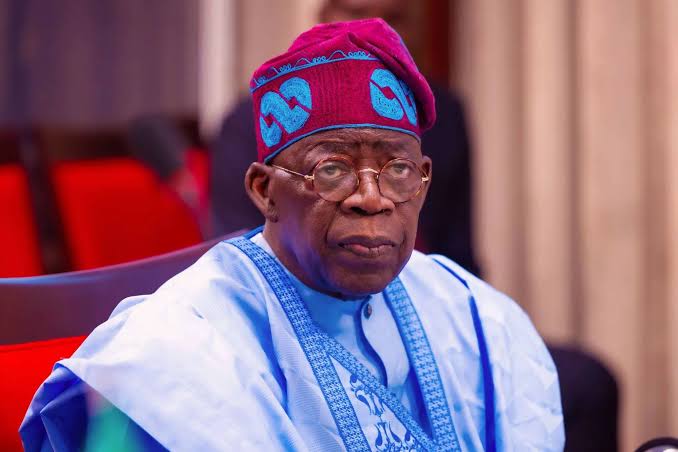
President Tinubu announced he would not attend every APC campaign rally ahead of the 2027 election, citing governance responsibilities, financial obligations to American creditors and the need to attract foreign investors who could contribute to Nigeria’s long-term economic growth.
Why it Matters:
A sitting president choosing selective rally attendance during a re-election campaign is unusual in Nigerian political history, particularly for an incumbent facing documented public dissatisfaction. Strategically, absence also insulates Tinubu from gaffes and hostile crowds while surrogates absorb campaign risks. Whether voters interpret the strategy as responsible governance or distance from the campaign trail will depend on how visible alternative campaign surrogates prove in the coming months.
5: 33 Govs Can’t Be Wrong In Supporting Tinubu — Onanuga Defends Reforms

Presidential spokesman Bayo Onanuga defended Tinubu’s economic reforms by citing the support of 33 state governors, falling food prices, nearly $60 billion in foreign reserves and returning foreign direct investment, while rejecting claims that nothing had improved under the administration.
Why it Matters:
Onanuga’s argument conflates political alignment with economic validation. The support of 33 governors reflects political calculation rather than independent assessment of economic performance. More consequentially, his selective citation of positive indicators ignores the UNDP poverty data released the same week. Both sets of facts are true. The political challenge for the administration is explaining how they coexist within one economic story that voters can recognise.
6: Pension Dispute — Retired Soldiers Barricade Abuja Board Office
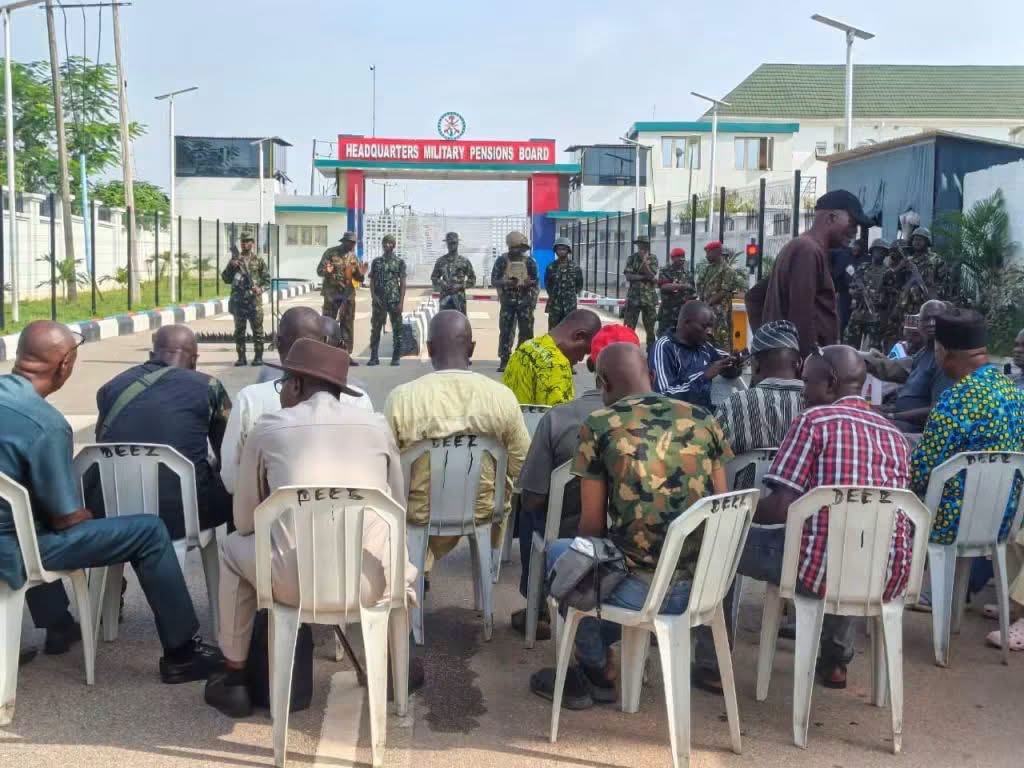
Retired military personnel barricaded the Military Pensions Board office in Dutse Alhaji, Abuja, demanding a review of the formula used to calculate their revised pensions, alleging that the computation method disadvantaged pensioners with comparable ranks who retired at different times.
Why it Matters:
Retired soldiers protesting outside a government office over promised pensions represents a serious moral and political failure. These are citizens who served the country in uniform, now reduced to barricading entrances to secure what the state agreed to pay them. Veteran grievances carry security implications: disaffected ex-servicemen are recruitment targets for the very groups they once fought. A government citing $60bn reserves cannot plead poverty before men who gave their service; it can only plead disorganisation.
Conclusion
Six stories, one country, and a week that offered unusually clear evidence of the structural challenges facing Nigeria’s political and institutional order ahead of 2027.
The week’s developments illustrate the competing pressures shaping Nigeria’s approach to 2027: the government’s determination to defend its economic record, opposition and ruling-party manoeuvres, and citizens’ continuing demands for relief and accountability.
Ultimately, Nigeria’s 2027 contest will be shaped not only by political alliances and campaign strategies, but also by how convincingly leaders respond to the lived realities of citizens.