
…How Oversabi Aunty became a cultural and box office force
There are stars, there are crowd-pullers, and then there are the rare figures who redefine the industry around them. Right now, Toyin Abraham stands firmly in that last category.
On Thursday, March 19, 2026, the National Film and Video Censors Board honoured the actress and filmmaker with the Box Office Champion Award after her directorial debut, Oversabi Aunty, crossed the ₦1 billion mark at the Nigerian box office. It was the kind of moment that does not merely celebrate success. It confirms status.
For Toyin Abraham, this was not just another career milestone. It was a declaration that she has entered a new league in Nollywood, one reserved for the few who can command attention, move audiences and convert popularity into cinematic history.
With Oversabi Aunty, Abraham became the first debut director in Nollywood history to break the billion-naira ceiling. In one sweeping accomplishment, she did more than prove her box office value. She challenged assumptions about who gets to lead, who gets to direct, and who gets to define the commercial future of Nigerian film.
That is what makes this story bigger than one film.
It is the story of reinvention. The story of instinct. The story of an actress who has steadily transformed herself into a filmmaking force with staying power, star appeal and business intelligence.
At the NFVCB event in Ikoyi, Lagos, Executive Director Shuaib Husseini described Abraham’s feat as a landmark for the industry. He was right. Her achievement is personal, yes, but it is also symbolic. It signals a more confident Nollywood, one increasingly aware of its own market strength and cultural reach.
For years, Nigerian cinema has fought to prove that its stories can compete, not just artistically but commercially. Oversabi Aunty did not merely join that conversation. It strengthened it. The film’s success offered a loud reminder that audiences will still pay, and pay heavily, for stories that feel rooted, accessible and genuinely entertaining.
Yet the making of this moment began long before Oversabi Aunty hit cinemas.
Born Olutoyin Aimakhu, Toyin Abraham rose from modest beginnings in Ibadan with a mix of resilience and raw charisma that would later become central to her public image. Her journey into acting in 2003 was not one of polished privilege or carefully mapped influence. It was built on grit, talent and a willingness to seize opportunity when it appeared.
She first found recognition in the Yoruba-language film scene, where productions such as Alani Baba Labake and Ebi Mi Ni helped introduce her to audiences. Even at that early stage, there was something unmistakable about her presence. She did not fade into roles. She inhabited them. She made viewers notice.
But Toyin Abraham’s career was never destined to remain static. What separates long-term stars from passing favourites is often the courage to evolve, and Abraham understood that instinctively.
Her move from the Yoruba movie circuit into mainstream Nollywood marked a major turning point. It widened her visibility and stretched her range, opening her up to a broader national audience. More importantly, it signalled ambition. She was not content to remain successful in one corner of the industry. She wanted the larger canvas.
She got it.
Over time, Abraham built a career defined by versatility. She could do comic chaos with ease, but she could also handle weightier emotional material. She brought sparkle to mainstream crowd-pleasers and conviction to more serious roles. This range helped her move beyond typecasting and into the rare category of performers who can carry a project on reputation alone.
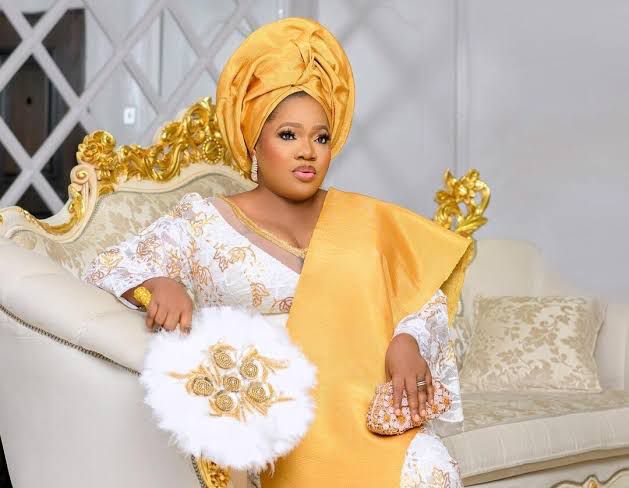
One of the performances that deepened critical respect for her was in Elevator Baby, a role that showcased her dramatic power and silenced anyone tempted to see her only through the lens of comedy or celebrity. The fact that she delivered that performance while heavily pregnant only added to the admiration around her dedication and discipline.
Soon, her screen résumé became one of the most recognisable in contemporary Nigerian cinema. The Ghost and the Tout. Bling Lagosians. Kasanova. Made in Heaven. Nimbe. The Millions. Don’t Get Mad, Get Even. Seven and a Half Dates. Diamonds in the Sky. Ijakumo: The Born Again Stripper. Shanty Town. In project after project, Toyin Abraham kept proving she could remain relevant in an industry notorious for moving on too quickly.
But acting, it turns out, was only one layer of the story.
The more compelling chapter is how she gradually expanded from performer to power centre.
Through Toyin Abraham Productions, she evolved into a filmmaker with a strong grip on what audiences want and how to deliver it. This transition mattered. It meant she was no longer only interpreting stories. She was creating them, shaping them and taking ownership of the business possibilities behind them.
That instinct for the commercial heartbeat of the audience is one of her sharpest strengths. Her Alakada franchise became proof of this, blending humour, aspiration, satire and familiar Nigerian realities into a formula that drew large crowds and strengthened her position as one of the industry’s safest commercial bets.
Then came Oversabi Aunty, the project that changed the scale of the conversation.
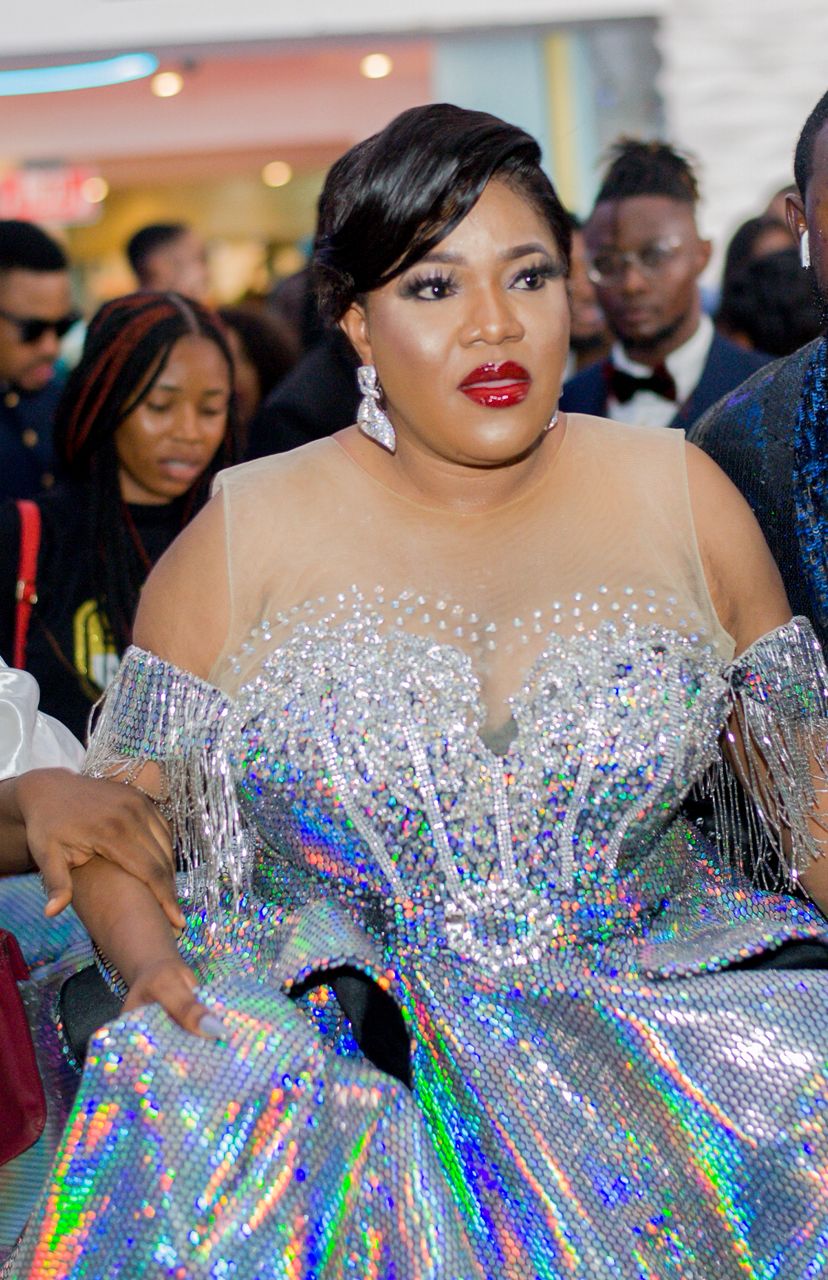
Released nationwide on December 19, 2025, after a red-carpet premiere on December 14, the comedy-drama quickly became one of the most talked-about films of the season. Built around the chaotic life of an overzealous church usher meddling in family and community affairs, the film tapped into an instantly recognisable social world. It was loud, funny, culturally textured and unashamedly Nigerian.
That authenticity mattered.
The cast, which included Mike Ezuruonye, Efe Irele, Queen Nwokoye, Jemima Osunde, Enioluwa Adeoluwa and Tana Adelana, helped drive the film’s appeal, but the deeper magic lay in its familiarity. Audiences saw their churches, their relatives, their neighbourhood dynamics and their everyday absurdities in the story. It felt close to home. And that closeness translated into tickets.
As the numbers climbed, the film stopped being just a hit and became a phenomenon.
Crossing the ₦1 billion threshold turned Oversabi Aunty into a landmark project and Toyin Abraham into a symbol of a larger truth: Nollywood’s future belongs increasingly to creators who understand both culture and commerce.
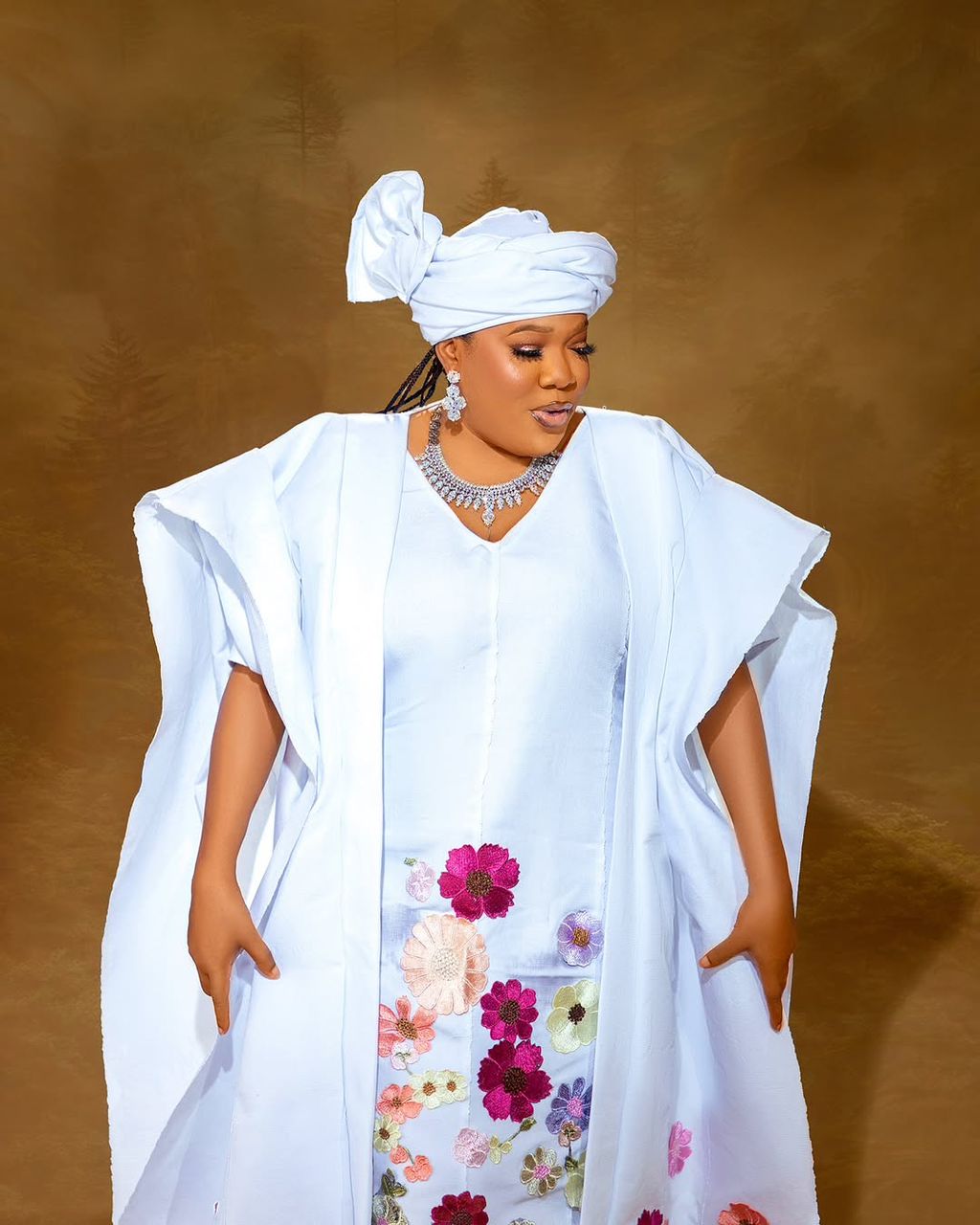
That this happened through her directorial debut only sharpened the impact. Plenty of actors attempt the transition behind the camera. Far fewer make it convincingly. Fewer still do so with a billion-naira result. Abraham did not step into directing timidly. She arrived with force.
In her acceptance speech, she thanked her husband, her team and the cinema-going public, noting that directing the film herself had been a personal dream. That dream is now part of industry history.
It also tells us something fundamental about her. Toyin Abraham is not simply ambitious. She is strategic. She knows when to stretch, when to pivot and when to bet on herself.
That self-belief has defined her rise.
Even her recent projects show that she is not interested in being trapped inside one genre or one audience expectation. Her work on Iyalode, a historical drama she co-produced, points to a filmmaker willing to engage with broader narrative territory and more layered cultural material. It suggests that the woman who has mastered commercially viable comedy is still exploring, still testing new creative frontiers.
READ ALSO: NFVCB Honours Toyin Abraham After ₦1bn Box Office Milestone
Off-screen, Abraham’s relatability has helped deepen her hold on public affection. Her marriage to actor Kolawole Ajeyemi, her role as a mother and stepmother, and her openness about family life have given her a sense of accessibility that many celebrities struggle to maintain. She is glamorous without seeming distant, famous without appearing unreachable.
That connection matters in the age of digital celebrity. Audiences are no longer drawn only to screen talent. They are also drawn to emotional familiarity. Toyin Abraham has found a way to remain both star and human, both aspirational and recognisable.
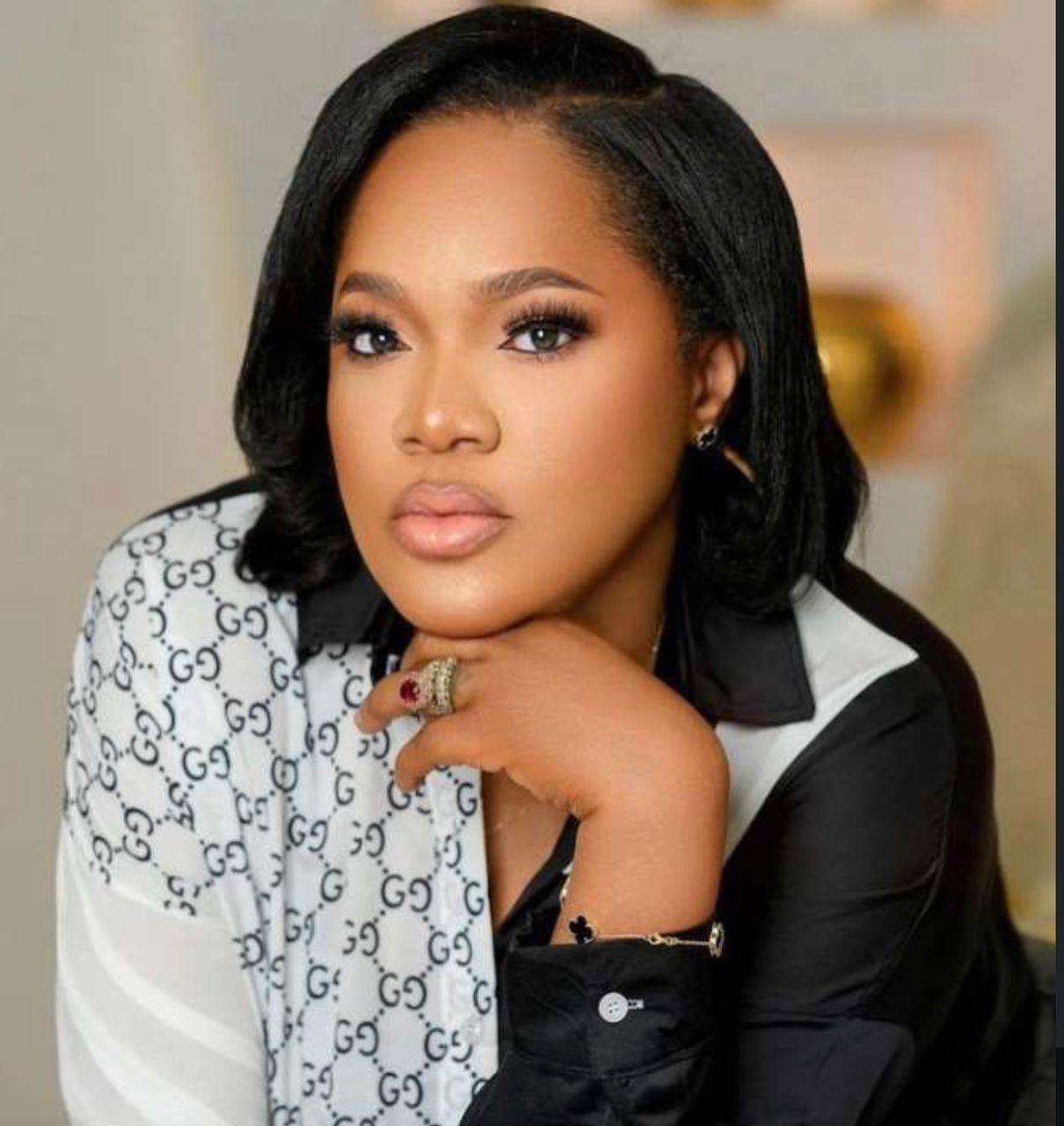
This is one reason her success resonates so deeply. She feels like someone people have watched grow, fight, stumble, recover, expand and ultimately conquer.
And now, with a billion-naira directorial debut and a fresh industry honour, she stands at a particularly powerful point in her journey.
She is no longer simply one of Nollywood’s most beloved actresses. She is now one of its clearest symbols of what modern success looks like: creative, bankable, entrepreneurial and culturally influential.
In many ways, Toyin Abraham’s story mirrors the evolution of Nollywood itself. Once underestimated, often chaotic, occasionally dismissed by outsiders, but always alive with energy and possibility. Today, both the industry and one of its brightest stars are proving that scale, structure and global relevance are no longer distant ambitions.
They are here.
For younger actors and emerging filmmakers, her story offers a compelling lesson: longevity in entertainment is not just about talent. It is about reinvention, ownership and understanding the audience deeply enough to keep surprising them.
For Nollywood, her success is an affirmation that bold local storytelling still works. That people will still show up. That cinema, when done with instinct and craft, can still feel like an event.
And for Toyin Abraham herself, this may only be the beginning of an even bigger era.
Because what she has built is more than celebrity.
It is influence.
It is brand power.
It is artistic authority.
It is box office muscle.
Above all, it is a legacy in motion.
Toyin Abraham is no longer just part of Nollywood’s success story.
She is one of the women writing its most exciting chapters.